Subnautica's ocean doesn't want you dead — it just doesn't care
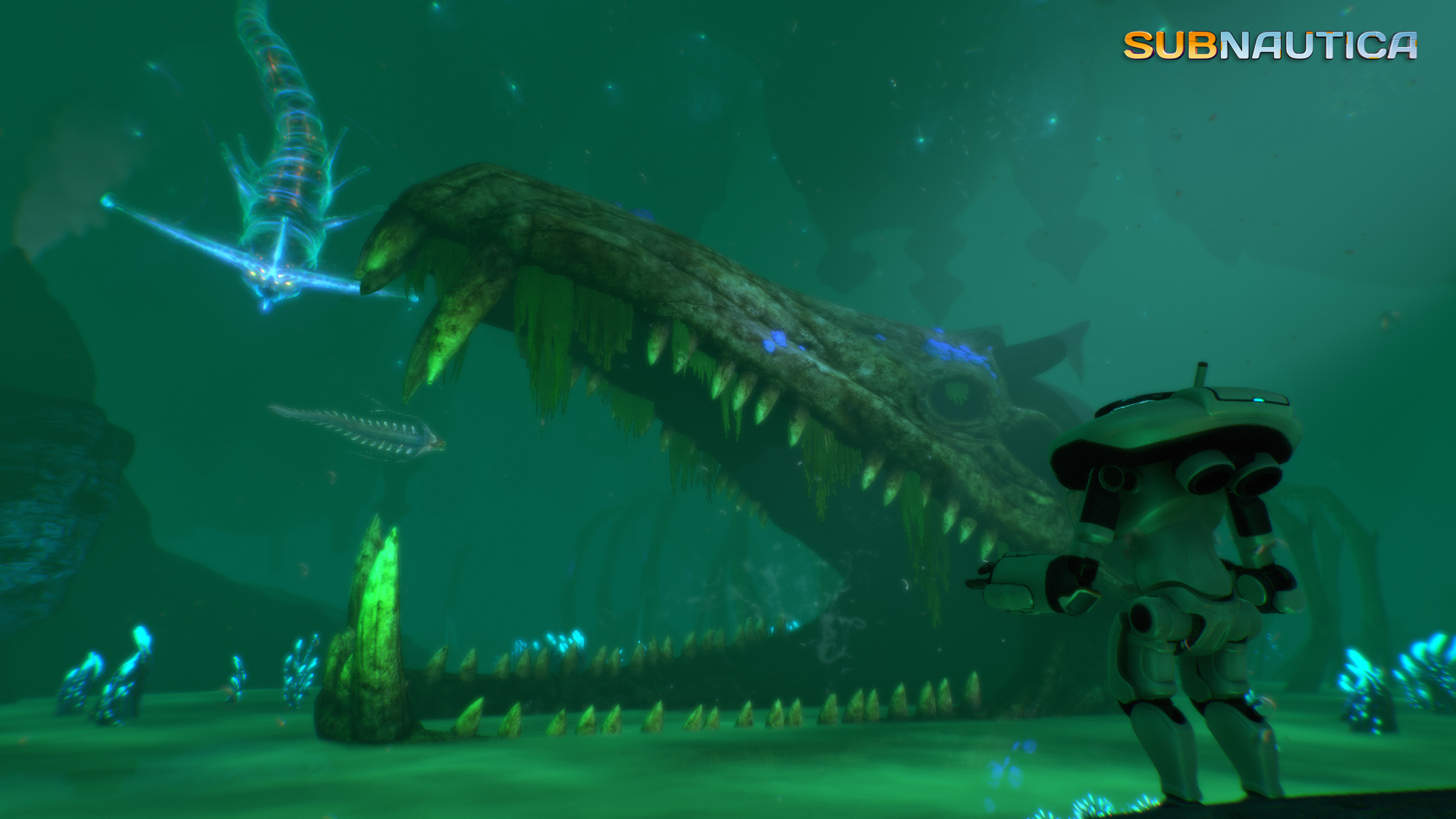
There's a moment in Subnautica — probably about four hours in, when you've patched your life-support situation just enough to feel confident — where you dive a little deeper than you should and realize the water below you doesn't end. The thermal vents glow faint orange at the edge of your headlamp. Something large moves outside the beam. Your oxygen counter is already ticking. That moment isn't scripted. Unknown Worlds didn't hand-place a cinematic there. It emerged from the way the game builds its world: layered biomes stacked vertically, light physics that actually degrade with depth, a sound design that shifts from ambient reef noise to something closer to industrial dread the further down you go.
Subnautica came out in full release in January 2018 after a long Early Access run, and it still gets discussed in survival game circles as a kind of benchmark — not for production scale, but for coherence. The systems hold together in a way that a lot of the genre doesn't quite manage. That said, it's not a flawless game, and some of its rougher edges are real enough that they're worth talking about honestly rather than waving past them in favor of the good stuff.
The planet 4546B is doing its own thing, and you're the intruder
What separates Subnautica from a lot of survival games is that the world wasn't designed around the player's convenience. The biomes — Safe Shallows, Kelp Forest, Blood Kelp Zone, the Void — exist in relation to each other geologically and ecologically, not as difficulty tiers on a progression roadmap. When you first push past the mushroom-dense Mushroom Forest into the deeper Grand Reef, it doesn't feel like a game unlocking the next zone. It feels like you've made a mistake in judgment and now have to deal with the consequences.
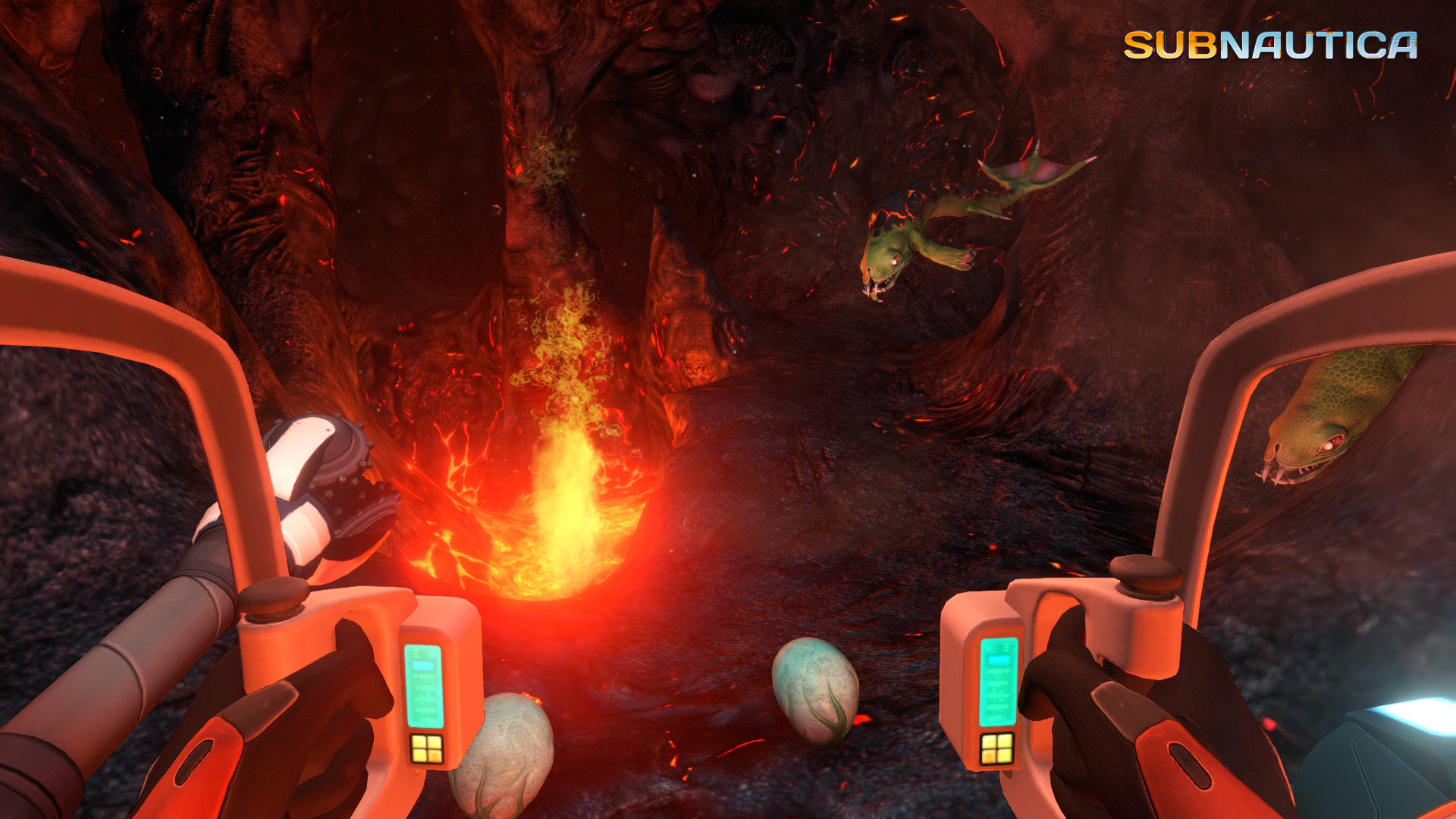 Atmospheric detail in Subnautica.
The creatures follow a similar logic. The Reaper Leviathan near the Aurora wreckage isn't a boss fight with a health bar — it's a predator that patrols a specific territory, makes specific sounds when it's tracking you, and will absolutely destroy your Seamoth if you misjudge the approach. Learning to work around it (cyclops running silent, careful timing, knowing when to simply not go there) is more satisfying than any direct combat encounter would have been. The game has almost no combat in the traditional sense, and that's one of its better decisions.
The narrative — delivered mostly through recovered audio logs from the wrecked Aurora and from Alterra Corporation's disturbingly cheerful AI — manages to be interesting without overwhelming the exploration. The story of what happened on 4546B emerges gradually, in pieces, and some of it lands with genuine weight. The Sea Emperor Leviathan arc in particular goes to places that feel earned rather than telegraphed.
Survival mechanics that mostly pull in the right direction
The resource loop works because it scales with the environment rather than against it. Early game, you're scraping titanium and quartz from the shallows. Mid-game, you're managing lithium and magnetite from biomes that require actual preparation to reach. Late game, you're coordinating ion cube retrieval from areas the game has been hinting at since hour two. It's not revolutionary design, but it's clean — each crafting tier opens gameplay in a meaningful way rather than just extending the number on a stat bar.
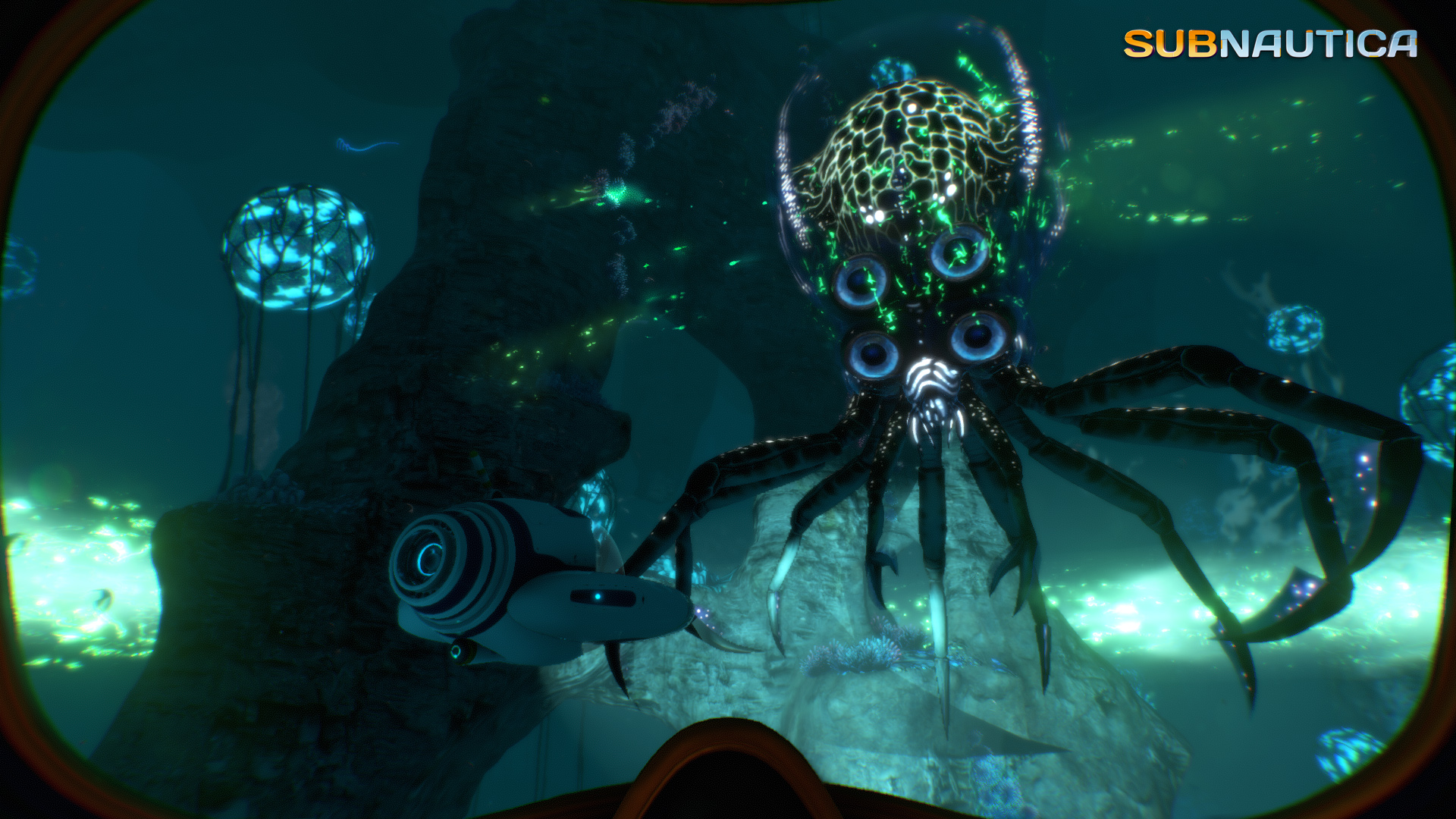 Combat encounter in Subnautica.
The Seamoth and the Cyclops submarine are well-designed tools. The Seamoth handles like something between a drone and a sports car — agile, satisfying, genuinely vulnerable. The Cyclops is a different animal: slow, enormous, capable of being your mobile base, and loud enough to attract attention in ways you have to actively manage. The silent running system on the Cyclops, where you toggle it to reduce detection at the cost of engine efficiency, is a small mechanic that adds a lot of texture to late-game traversal.
Food and water management, honestly, gets a bit tedious. It's not broken, but once you've established a base with a bioreactor and a small fish farm, the hunger and thirst meters fade into background noise. There's a case to be made that this is fine — you've built stability, that should feel stable — but I found myself wishing the resource challenge had somewhere new to go after a certain point.
Base building: functional, occasionally maddening
The habitat builder is genuinely enjoyable for the first few hours. Placing corridors, attaching compartments, watching your oxygen supply stabilize as you build out a proper base — it scratches the same itch that early Minecraft did, except with better stakes around it. The modular system allows for real creativity, and the fact that hull integrity is a meaningful variable (rather than just aesthetic) gives the building decisions some weight.
The placement system, though, will fight you. Snapping modules to the correct orientation in open water involves a lot of rotating and cursing, and the camera doesn't always cooperate. It's not a dealbreaker, but it's the kind of friction that feels like a technical limitation rather than a deliberate design choice. Building complex multi-room bases near thermal vents or in the Jellyshroom Cave — which is worth doing, atmospherically — requires patience that the interface doesn't reward.
Sound and visual design are doing heavy lifting
Simon Chylinski's soundtrack is integral to how the game feels. It shifts in real time based on depth and biome — the Safe Shallows have this open, slightly melancholic ambience, while the Inactive Lava Zone pushes toward something oppressive and percussive. The transition is gradual enough that you don't clock the moment it changes, you just notice that you're tense. That's good sound design.
Visually, the game holds up well for its age. The bioluminescent creatures in the Deep Grand Reef, the way the Lost River looks when you first drop into it from the Blood Kelp Zone, the thermal shimmer near the lava zones — Unknown Worlds squeezed a lot out of their engine. Some surface-level textures are dated, and the Aurora exterior has always looked a bit rough, but underwater the art direction carries enough conviction that the technical limits don't bother you much.
The ambient creature sounds deserve specific mention. Warpers make a noise when they phase in that's genuinely unsettling, calibrated perfectly to give you just enough time to register dread before they're on you. The Ghost Leviathan's call in the Lost River is one of the better pieces of environmental storytelling in the game — that sound communicates scale, age, and indifference simultaneously.
What the game expects from you
Subnautica doesn't have a quest log. It has a PDA that aggregates data, which is a meaningful distinction. The game trusts you to synthesize information and make decisions without a waypoint telling you where to go. For players who've grown up with modern open-world design — your Assassin's Creeds, your Far Crys — this can feel alienating at first. The survival genre has trained certain expectations, and Subnautica meets some of them and ignores others deliberately.
There are players who bounce off it early because the initial direction is loose. The game tells you the Aurora's reactor is going to melt down and that you need to figure out what happened to the ship, but it doesn't give you a timer or a marker. Some people find that liberating. Some find it frustrating. I'd argue the frustration is worth sitting with — the moment you piece together the first Signal fragments and start plotting your path to the alien data caches, something clicks that doesn't happen when the game tells you exactly where to walk.
Five years out, why does it still hold?
The survival genre has grown considerably since 2018 — Valheim brought a crafting-meets-mythology structure that clicked with a huge audience, Green Hell went harder on realism than most players wanted, Grounded scaled everything down to the backyard and it worked. Against that field, Subnautica looks like a game that found something specific and committed to it: vertical exploration, environmental storytelling, deliberate pacing.
Unknown Worlds followed up with Subnautica: Below Zero in 2021, which is a competent game with a more guided narrative and, debatably, less tension in its world design. The original remains the sharper experience — partly because the planet felt more hostile, partly because the story was told with more restraint. Below Zero's surface biomes and voiced protagonist shifted something in the formula that not everyone agreed with, myself included.
Subnautica earns its reputation not because it's a perfect survival game — the placement system will annoy you, the food loop goes slack by midgame, and your first encounter with a Ghost Leviathan in the Lost River might happen before you're remotely prepared for it. It earns its reputation because the ocean feels like a real place that exists independent of your presence, and that's rarer than it should be. You're not there to conquer 4546B. You're there because your ship crashed, and the planet has not adjusted its plans accordingly.
Editorial scoring
Reader Q&A
How long does it take to finish Subnautica's ocean doesn't want you dead — it just doesn't care?
Main story runs around 60 hours depending on how thoroughly you explore. Completionists can spend 2-3× that.
Is Subnautica's ocean doesn't want you dead — it just doesn't care good for newcomers to Underwater Survival?
For total newcomers, expect a 5-8 hour ramp-up. Once you internalize the loop, it clicks.
Which platform should I play Subnautica's ocean doesn't want you dead — it just doesn't care on?
Steam Deck handles this title well — verified compatibility on most recent patches.
Was Subnautica's ocean doesn't want you dead — it just doesn't care worth the launch-day price?
Released in 2018, and as of writing it holds up. Wait for a sale if you're price-sensitive — major discounts arrive within 6 months.
Are there DLCs or expansions worth picking up?
Skip the cosmetic DLC. The story expansion is the only one we'd recommend at full price.
What did Unknown Worlds get right (and what could be better)?
Strongest: art direction, audio design, set-piece variety. Weakest: late-game balance and a few persistent quest-log bugs.
Reader comments