Returnal won't explain itself — and that's the whole point
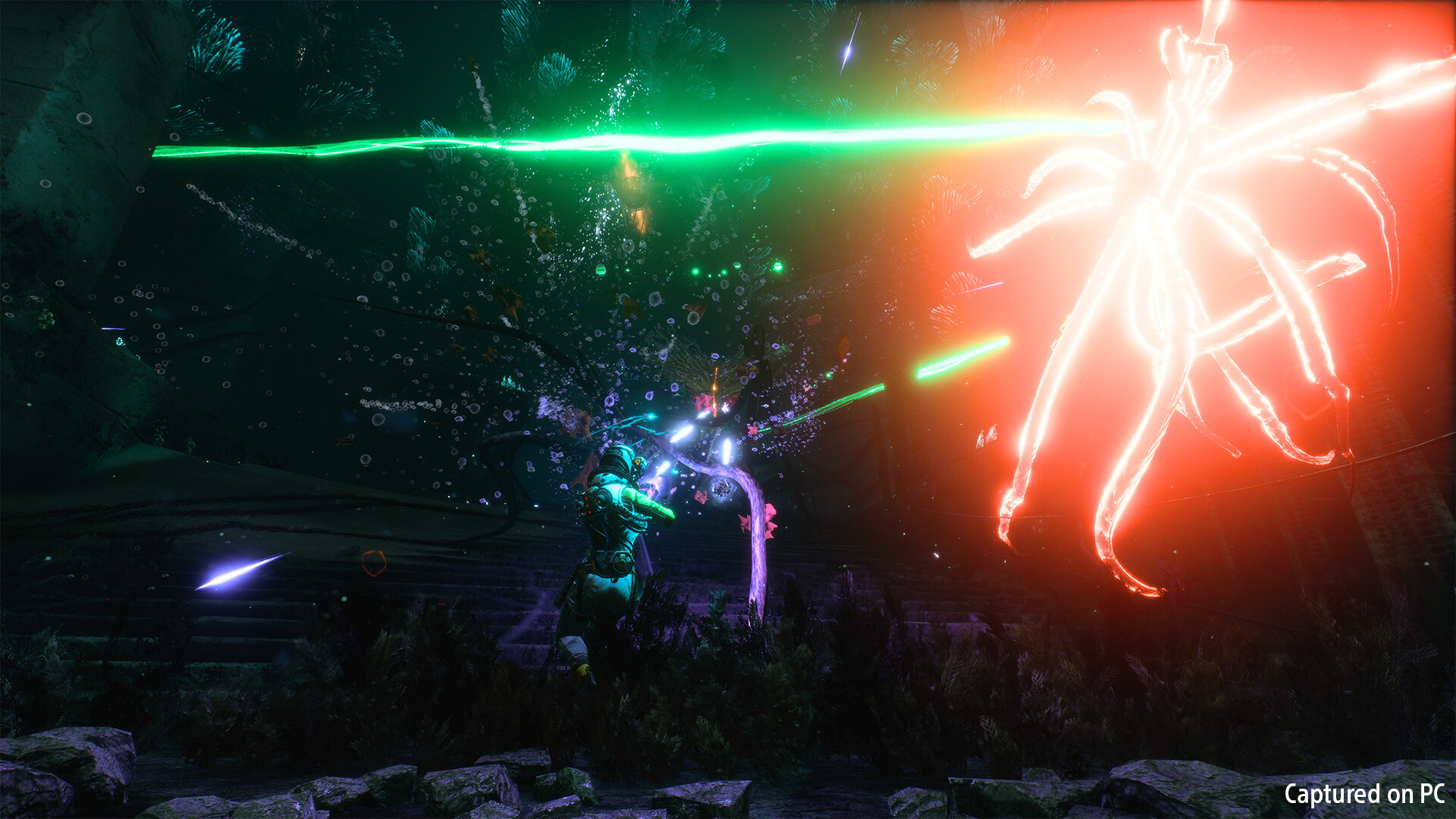
Returnal does not ease you in. The opening sequence deposits Selene Vassos in a rainstorm on an alien world, her ship burning behind her, and within about ninety seconds something is trying to kill her. Housemarque's 2021 PlayStation 5 exclusive has the confidence — or the audacity, depending on your patience — to treat that first death not as a tutorial stumble but as a structural statement. You died. You will die again. The planet resets, but you remember. That's the whole architecture.
What makes Returnal interesting isn't that it's hard. Plenty of games are hard. What makes it interesting is how precisely it calibrates that difficulty to its atmosphere, and how clearly it identifies the player type it's been built for — without ever quite admitting it. This is a game for people who find flow in repetition, who read risk carefully, who get annoyed not by failure but by imprecision. If that sounds like a compliment with conditions attached, it is.
The Loop That Earns Its Keep
Returnal is a roguelite third-person shooter, but that genre label undersells how tight its execution is. Each run through Atropos is a procedurally assembled gauntlet — biomes that reshuffle their corridors and enemy placement each cycle, with randomised weapon drops and passive modifiers that stack, interact, and occasionally break in your favour. The base traversal is excellent. Selene moves fast, the dash is nearly frame-perfect responsive, and the aiming has enough give to reward aggressive play without becoming an auto-assist crutch. Housemarque's decade-plus background in arcade shooters — Resogun, Nex Machina — is visible in every hitbox.
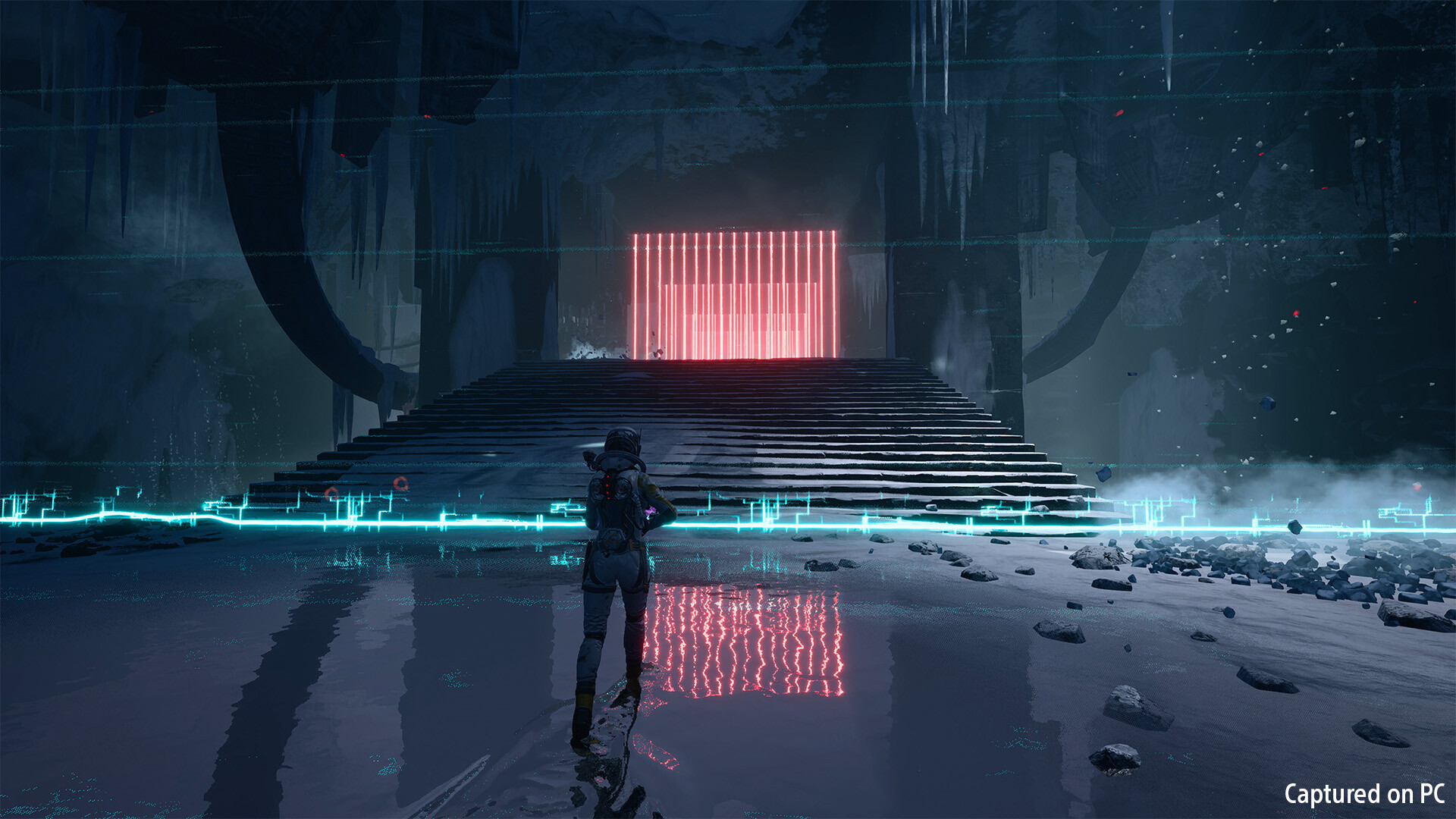 Scene from Returnal.
The weapon system is where the loop gets texture. Each gun has a proficiency level that unlocks over use, and each has a secondary Alt-Fire ability — some useful, some transformative. The Spitmaw Blaster at low proficiency is a serviceable close-range blast. At full proficiency, its alt becomes a tool for managing clustered swarms in ways that change how you move through a room. The game quietly encourages you to stick with a weapon long enough to understand it, which is a considered design choice in a genre that usually rewards constant swapping. The passive modifier system — Parasites and Artifacts that trade buffs for penalties — adds a layer of on-the-fly risk assessment that keeps each run feeling distinct rather than routine.
Pacing and the Weight of the First Biome
The Overgrown Ruins — the first biome — is where Returnal wins or loses most players. It's the longest stretch before anything feels like it's opening up, and it's the biome you'll spend the most time in before a viable run starts clicking. Some players never get through it. That's partly a design decision about difficulty floor, partly a systems-communication problem. The game does a poor job explaining Ether's function, or why picking up a Parasite in your first run with no context is different from picking one up when you understand the tradeoff structure. You're expected to learn by doing, and the doing can feel punishing before it feels legible.
Once the Overgrown Ruins stops being a wall and starts being a language, the pacing opens up considerably. Biome transitions — from organic grotesque architecture to alien urban sprawl to something close to cosmic horror — are paced well enough that each new environment signals a genuine shift in enemy behaviour and engagement design. The Crimson Wastes, the third biome, introduced airborne enemies in formations that fundamentally changed how I was using vertical space. That kind of design escalation, where the environment teaches new movement vocabulary through necessity, is what Housemarque does better than almost anyone in the mid-tier studio space.
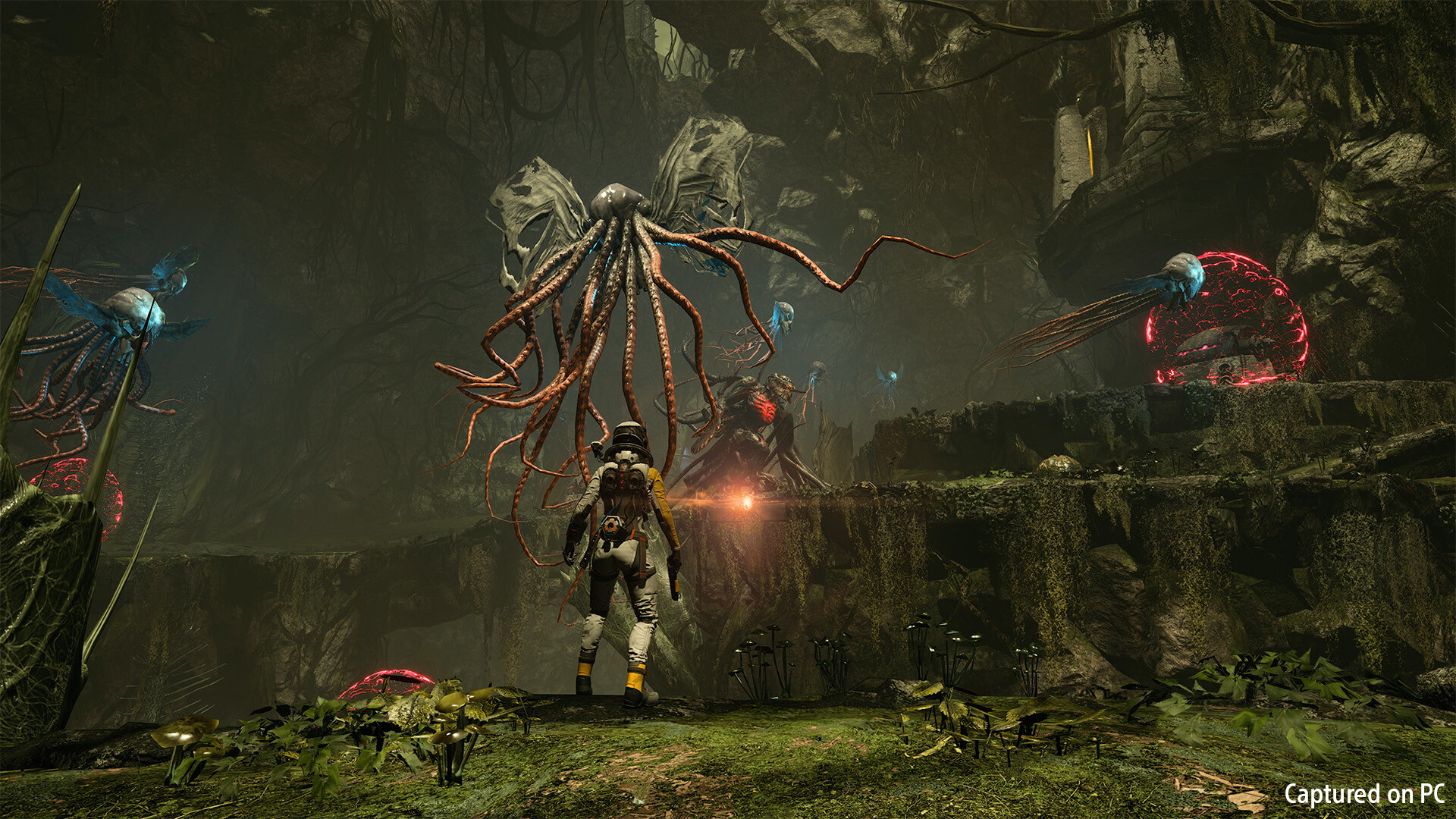 Scene from Returnal.
The Narrative Is Doing More Than It Appears
Returnal's story is oblique to a degree that will annoy players who want their science fiction delivered clearly. The narrative comes in fragments — audio logs, brief text entries, and the House sequences, which are first-person walking-sim interludes that break the shooter loop entirely and contain some of the game's most unsettling writing. Selene's relationship with her past and the recurring image of the crashed ship she keeps discovering are doing psychological work that the environmental storytelling gradually contextualises. It's closer to Observation's approach than it is to Halo's.
Whether you find that satisfying depends partly on what you want from a game narrative and partly on whether the central mystery retains enough coherence by the end to justify its opacity. Honestly, I found the final act's revelations a little thin — the imagery earns more than the explicit plot beats deliver. But the atmosphere generated in service of that narrative is almost never wasted. The audio design in particular does heavy lifting; the sound of Atropos is a constant, semi-biological drone that makes silence feel like a threat. Jane Perry's performance as Selene grounds all of it.
Presentation as Mechanical Language
Returnal was a launch-window PlayStation 5 title, and Housemarque used the hardware with some discipline. The DualSense's adaptive triggers are integrated into the shooting in a way that has actual mechanical meaning — certain weapons have a half-press secondary aim that triggers different fire modes, and you feel the resistance change before the mode shifts. It's a small thing, but it means the controller stops being neutral and becomes part of the information system. That's worth noting because most implementations of adaptive trigger feedback are decorative at best.
Visually, the game leans hard into biopunk grotesque — architecture that reads as both constructed and grown, with a colour palette that shifts from sickly yellows and purples in the early biomes to colder, more abstract blues and whites in the later ones. The enemy design follows the same logic: early Scouts are vaguely humanoid, later enemies are geometrically abstract, barely classifiable as organisms. Housemarque is telling you something about Selene's psychological state through what she's encountering, and whether you notice that or not, it works on you.
Who This Game Is Quietly Built For
Returnal doesn't advertise its intended audience, but it has one. Players who bounced off Dark Souls because of stat systems but loved the spatial memorisation will find this familiar in structure, different in texture. Players who cleared Hades multiple times and wanted something harder and less narrative-generous will likely find it close to ideal. Players who need clear progression markers between sessions — something to show for time spent — will struggle. There's no mid-run save point in the base game (the Suspend feature arrived in a later patch and functions as a session pause, not a true save). That original design decision tells you something about Housemarque's philosophy: runs are complete units. Interrupting them costs something.
The accessibility question is real and worth taking seriously. The game has no difficulty slider, no assist mode, no option to reduce enemy aggression. This is a deliberate creative stance, similar to FromSoftware's longstanding position on the same question, and it produces the same debate. I'm not sure the debate has a clean answer here either. What I'd say is that Returnal's learning curve, unlike some games in this space, is compressed rather than extended — most of the genuinely hard material is front-loaded, and once your run quality improves, the skill ceiling rises with you in a way that feels earned rather than gated.
Where It Stands
Returnal is not a comfortable game to recommend broadly. It will refuse a certain kind of player flatly, and it doesn't apologise for that. But for players who want a shooter that takes its genre seriously — that ties difficulty to atmosphere, that makes death structurally meaningful rather than punitive, that treats the player as capable of reading systems without handholding — it's close to exceptional. Housemarque built something that felt genuinely new in 2021, and most of it still holds. The Overgrown Ruins will still kill you on your third or fourth run. That's still the point.
Editorial scoring
Reader Q&A
How long does it take to finish Returnal won't explain itself — and that's the whole point?
Main story runs around 18 hours depending on how thoroughly you explore. Completionists can spend 2-3× that.
Is Returnal won't explain itself — and that's the whole point good for newcomers to Action Roguelike?
For total newcomers, expect a 5-8 hour ramp-up. Once you internalize the loop, it clicks.
Which platform should I play Returnal won't explain itself — and that's the whole point on?
Steam Deck handles this title well — verified compatibility on most recent patches.
Was Returnal won't explain itself — and that's the whole point worth the launch-day price?
Released in 2021, and as of writing it holds up. Wait for a sale if you're price-sensitive — major discounts arrive within 6 months.
Are there DLCs or expansions worth picking up?
The base game is complete; expansion DLC adds 10-15 hours of additional content if you want more.
What did Housemarque get right (and what could be better)?
The systems are confident and the combat is satisfying. The story handoffs and load times are the rough spots.
Reader comments