Persona 5 Royal is so stylish it hurts to put down
Persona 5 Royal does not ease you in. Within the first twenty minutes, you are watching a heist gone wrong, sitting through a police interrogation, and getting handed a velvet-lined menu that asks you to pick a difficulty setting while an Acid Jazz track plays underneath the whole sequence. Atlus made a game that treats its own aesthetics as a load-bearing wall. Strip the visual language and the sound design out of Persona 5 Royal and what remains is a solid but fairly traditional turn-based JRPG. Leave it all in, and you have one of the most coherent audio-visual packages the genre has ever produced.
The Royal version, released in the West on PS4 back in 2020 and then ported to everything else in 2022, adds a third semester to the base game's story, a new party member in the gymnast-turned-Phantom-Thief Kasumi Yoshizawa, and a collection of smaller quality-of-life adjustments that smooth over some of the rougher edges from the 2017 original. Whether all those additions justify a full-price revisit depends entirely on how you felt about the first hundred hours. For newcomers, there is no longer any real reason to play the base game. Royal is the version that exists now.
The combat earns its reputation
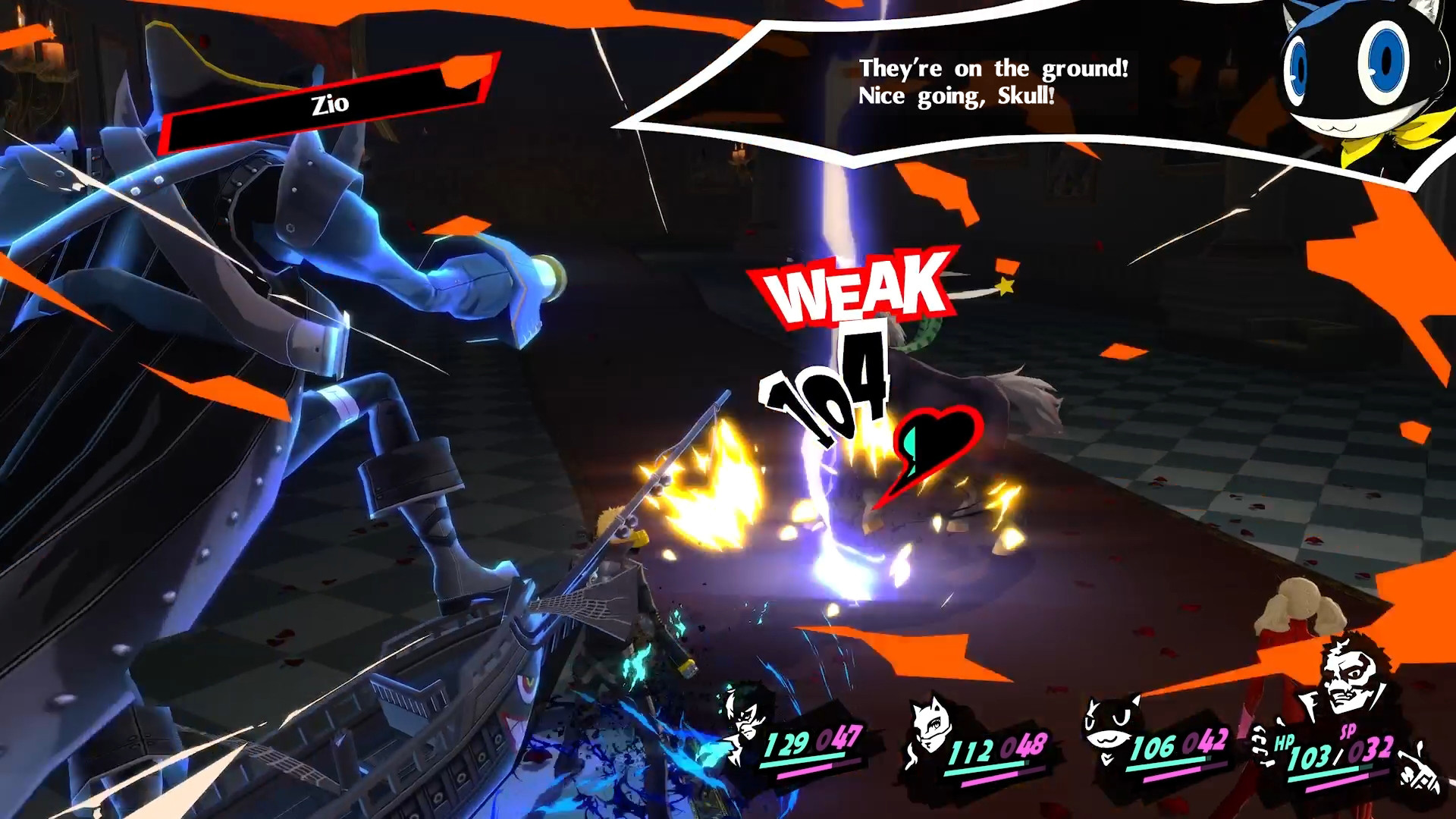
Persona 5's battle system is built on a Press Turn mechanic borrowed from the mainline Shin Megami Tensei series. Hit an enemy's elemental weakness or land a critical strike and you knock them down, earning an extra action. Get all enemies down at once and you trigger an All-Out Attack, a screen-filling gang rush that ends with a stylized splash card. It sounds simple because the entry-level version of it is simple. What elevates the system is the degree to which it punishes passive play.
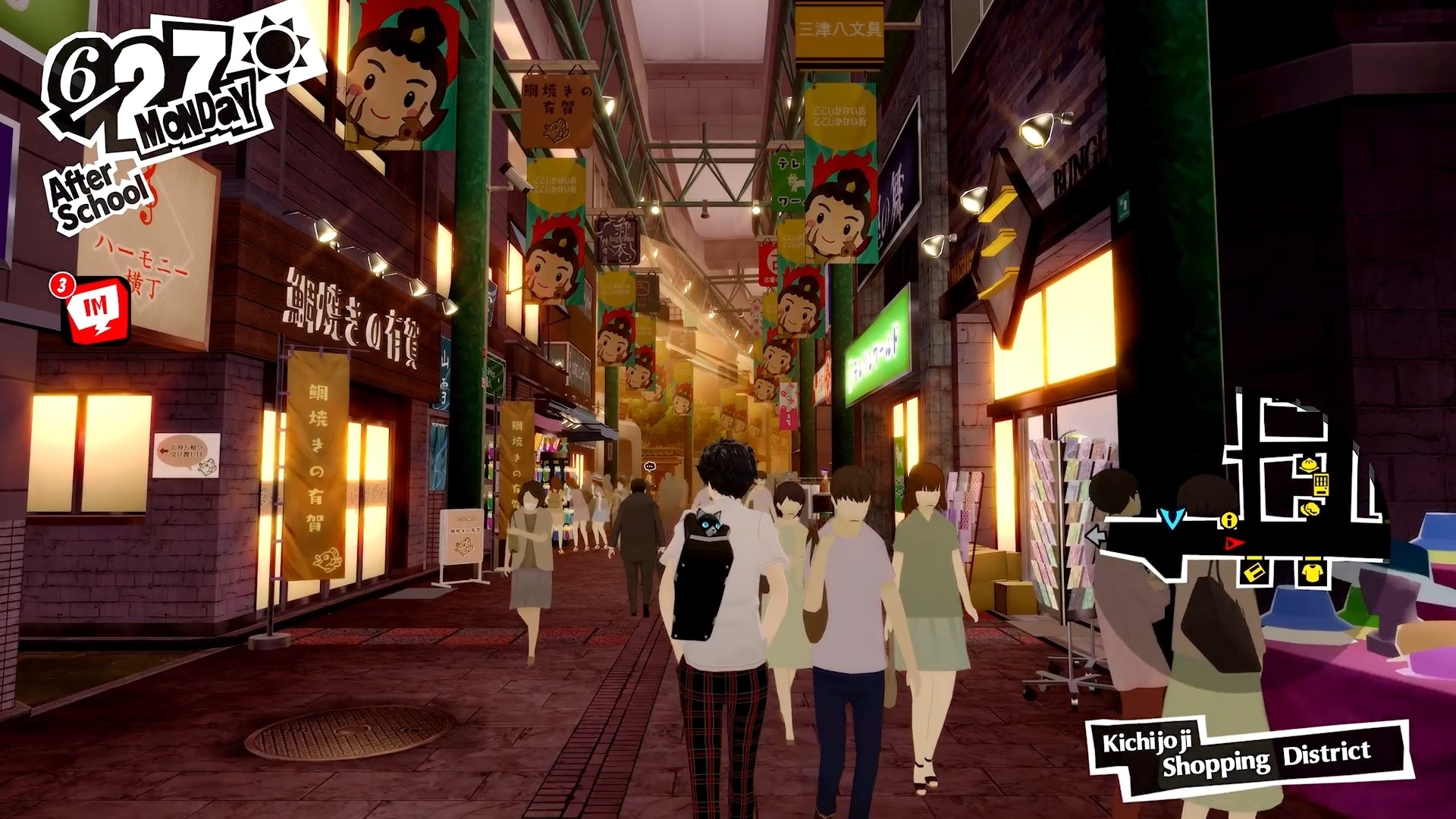 Atmospheric detail in Persona 5 Royal.
Enemies can exploit your weaknesses too. A careless physical build walking into a room full of wind-users will get stun-locked inside two turns. The game quietly demands that you pay attention to your Persona loadout, and the Velvet Room's fusion system — where you combine collected Personas into stronger ones, carrying over skills you want to preserve — gives you the tools to respond. Grinding for its own sake is rarely necessary. What the game actually asks for is strategic composition. That distinction matters more the deeper you go.
Royal adds Showtime attacks, paired moves between specific party members that trigger under certain HP conditions. They are flashy, they do significant damage, and they add a small element of planning around party composition that the base game lacked. Honestly, they feel slightly grafted on compared to the cleaner systems around them, but they are not disruptive either.
The Palaces are where the design gets serious
Each major villain in Persona 5 Royal has a Palace — a distorted mental dungeon that physically represents their corrupted worldview. Kamoshida's Palace is a castle where he is king and students are slaves. Kaneshiro's is a bank vault built from people's shame. The conceit is that the Phantom Thieves must infiltrate these spaces, reach the villain's Treasure, and steal it before a deadline, triggering a change of heart. It is the game's best structural idea, and it works because each Palace has its own puzzle logic and visual grammar.
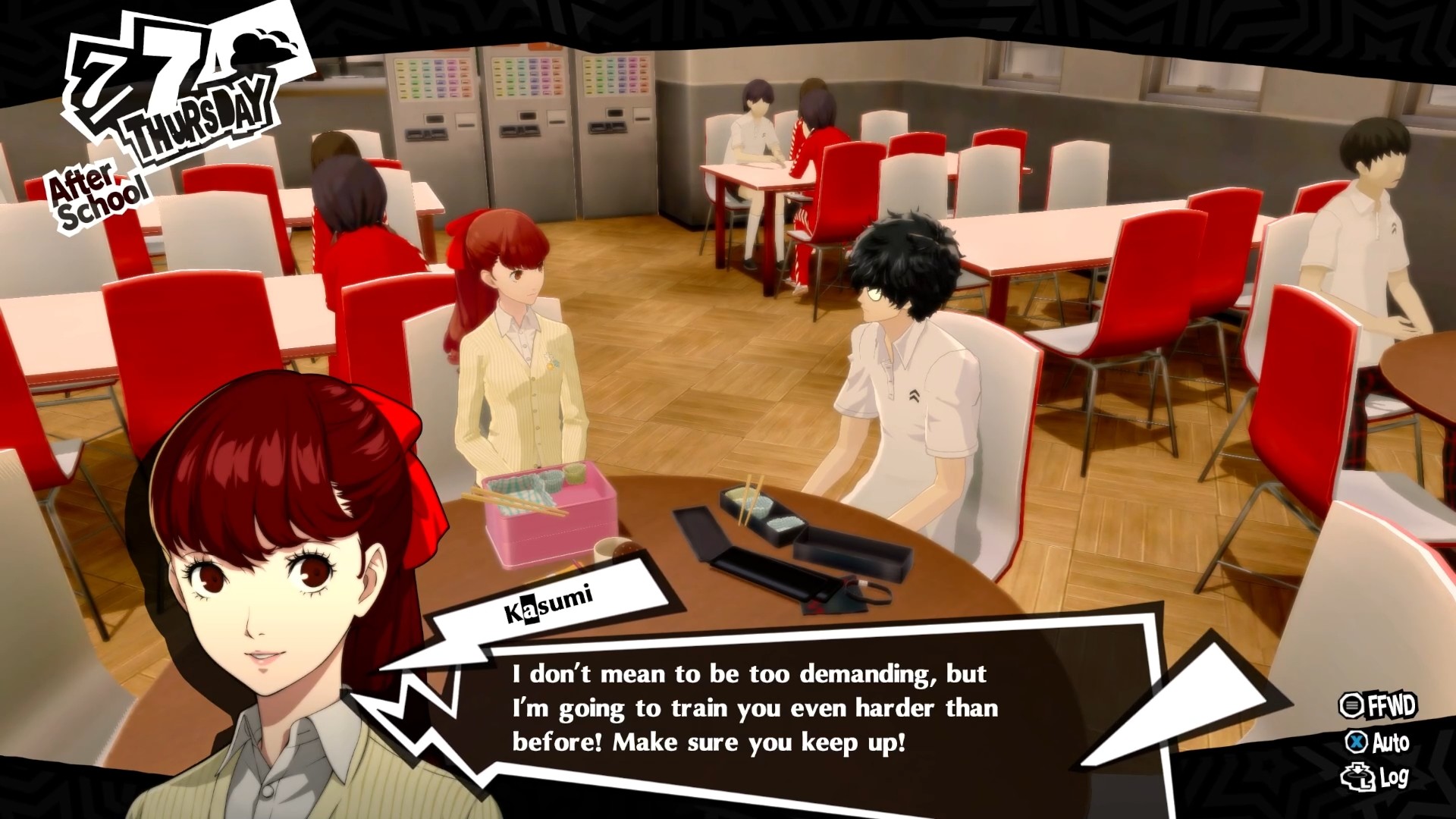 Combat encounter in Persona 5 Royal.
Some Palaces are better than others. The third one, Madarame's Museum, is a standout — its gimmick involves duplicate paintings that hide real pathways, and the environmental storytelling about his relationship with his students is quietly devastating. The sixth Palace drags. It is the longest and the least tightly designed, and by the time you reach its final section the game has already told you everything you need to know thematically. Atlus could have cut twenty percent of it without losing anything.
Royal's new content adds a third-semester Palace that is genuinely impressive in its ambition. It recycles visual assets from earlier dungeons deliberately, as a piece of thematic design rather than laziness. Whether that lands for you will depend on how invested you are in the secondary cast by hour ninety.
The social calendar is both the game's engine and its leash
Outside of dungeons, Persona 5 Royal runs on a day-planner structure. You are a high school student in Tokyo with a fixed calendar, and every afternoon and evening is a slot you can spend studying, training, working part-time jobs, or building Social Links — called Confidants here — with a cast of around twenty characters. Maxing out a Confidant unlocks passive abilities and, for party members, new combat options. The structure creates constant, low-grade pressure. There is never quite enough time.
That pressure is intentional, and it mostly works. Choosing to spend an evening with Futaba Sakura instead of leveling up your Guts stat is a real tradeoff. The game makes you feel the shape of Joker's life. Where it becomes friction rather than texture is in the early game, before you have unlocked enough Confidants to feel like you have genuine options. The first month or so in Shibuya can feel like you are solving an optimization problem rather than living inside a story.
Royal slightly loosens the calendar's grip — a few Confidant progression gates that required specific stat thresholds in the original have been eased, and Morgana no longer forces you to sleep as early. These are small changes that add up. New players especially will feel the difference even if they cannot point to exactly where it came from.
Writing: the highs are very high
The Phantom Thieves are a specific kind of wish-fulfillment: teenagers who hold powerful adults accountable for their abuses. The premise works because Atlus grounds it in real social mechanics — a gymnastics teacher who sexually harasses students, an artist who exploits young talent, a financial predator who targets people trapped by debt. Each Palace target is drawn from a recognizable type, not a fantasy villain. When the game earns its emotional beats, it earns them properly.
The writing is not consistent across the whole cast. Some Confidant storylines — Tae Takemi's, Sojiro Sakura's — are genuinely well-developed arcs with specific details that make the characters feel lived-in. Others feel like placeholder character work dressed up in stylish cutscene framing. Ryuji Sakamoto gets a raw deal in the main story despite being positioned as the co-lead. The localization team at Atlus USA does strong work throughout, though a handful of lines in the third semester land slightly too on-the-nose, the kind of thing that might have benefited from one more draft.
Shoji Meguro's soundtrack is doing a lot of heavy lifting
Talking about Persona 5 Royal without talking about the music is not really an option. Shoji Meguro composed a soundtrack that toggles between Acid Jazz, J-Pop, lo-fi hip-hop, and orchestral arrangements without ever feeling incoherent. Last Surprise, the standard battle theme, has been analyzed in music theory circles. Rivers in the Desert, the track that plays during one of the game's climactic confrontations, is structured to escalate with the narrative beat it underscores. This is not incidental background work.
Royal adds a handful of new compositions, most notably the tracks tied to Kasumi and the third-semester content. They are good, though a couple of the new pieces feel slightly softer in personality compared to the originals. Nothing in the additions reaches the height of Life Will Change or Beneath the Mask. That is a high bar, not a real criticism.
Where Atlus still has work to do
Persona 5 Royal is not a game that handles all of its subjects with equal care. A recurring gag involving two gay men who make unwanted advances on male party members sits poorly against the game's otherwise progressive instincts. Atlus has acknowledged the criticism. It remains in the localized version, unchanged. This is the kind of thing that reminds you the series has a dedicated fanbase that expects better, and that the development team is not always listening at the same frequency.
Kasumi as a character is genuinely interesting in the third semester but conspicuously thin in the first two-thirds of the game. Her story is withheld in a way that reads more like structural awkwardness than deliberate mystery. You can feel the seams where she was retrofitted into existing content. The new semester content itself is strong enough that this is forgivable, but it does make Royal's structure feel slightly uneven in a way the base game's pacing did not.
None of that stops Persona 5 Royal from being essential if you have any tolerance for turn-based combat and a hundred-hour runtime. The game knows exactly what it is — a stylized, politically charged, melodramatic JRPG that takes its own aesthetics seriously — and it executes that vision with more discipline than almost anything else in the genre. The flaws are real. So is the craft. Put it down, and something pulls you back.
Editorial scoring
Reader Q&A
How long does it take to finish Persona 5 Royal is so stylish it hurts to put down?
Main story runs around 32 hours depending on how thoroughly you explore. Completionists can spend 2-3× that.
Is Persona 5 Royal is so stylish it hurts to put down good for newcomers to Stylish JRPG?
Yes — Persona 5 Royal is so stylish it hurts to put down is a great entry point. The early hours teach the systems gradually and the difficulty curve is reasonable.
Which platform should I play Persona 5 Royal is so stylish it hurts to put down on?
PC version offers the highest fidelity if your rig can handle it. Console versions are polished out of the box.
Was Persona 5 Royal is so stylish it hurts to put down worth the launch-day price?
Depends on backlog. The replay value justifies the price for genre fans; casual players should wait for a 40%+ discount.
Are there DLCs or expansions worth picking up?
The base game is complete; expansion DLC adds 10-15 hours of additional content if you want more.
What did Atlus get right (and what could be better)?
Atlus nailed the moment-to-moment loop and the world-building. Pacing in the mid-game and inventory UX have room for improvement.
Reader comments