Payday 2 in 2025 — does the original heist sandbox still hold up?
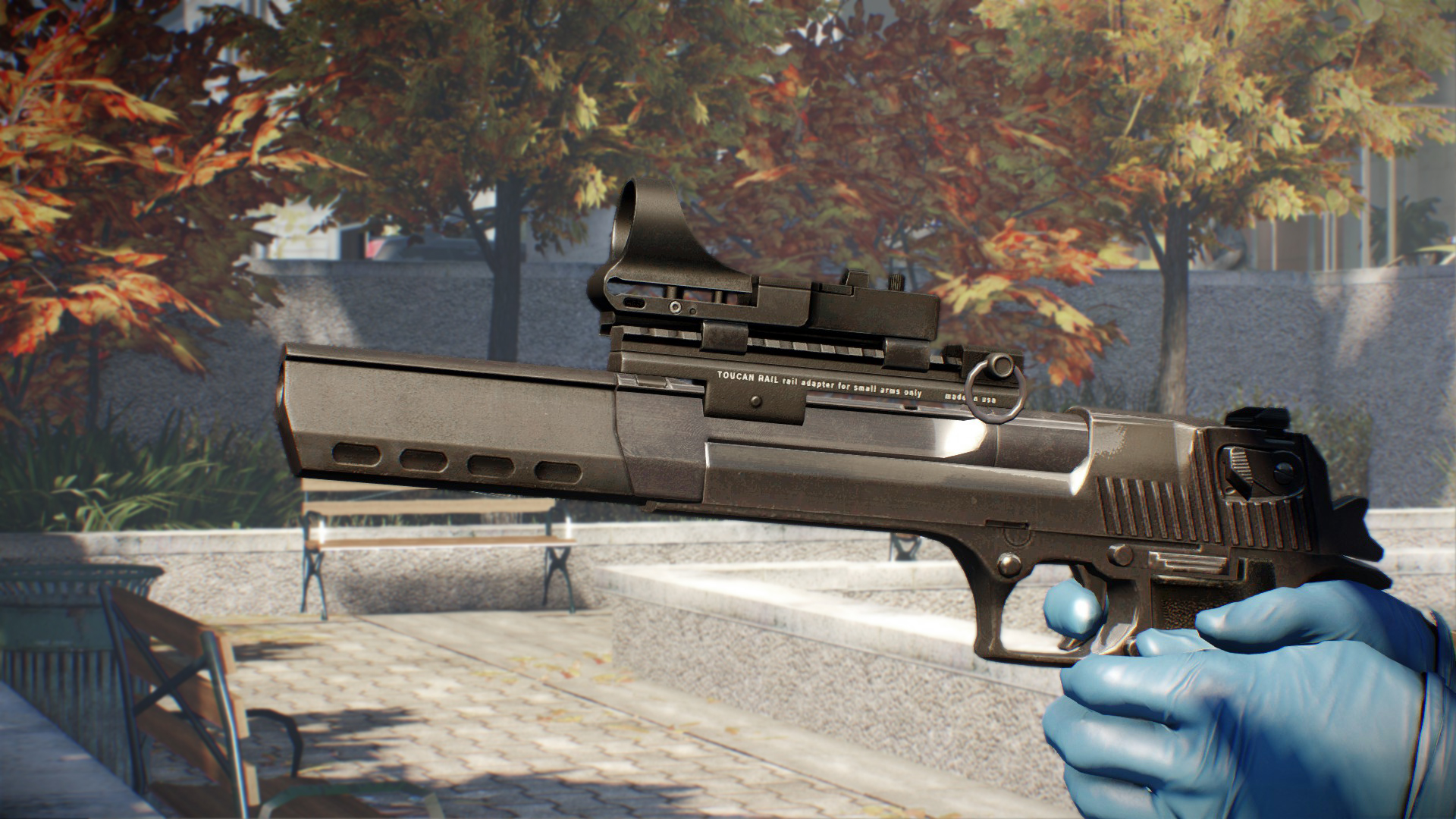
Eleven years is a long time for any live-service game to survive, let alone one built on cooperative bank robbery and a reputation for punishing difficulty. Payday 2 launched in August 2013, was declared dead twice by its own community, and still — as of mid-2025 — receives weekly content patches from Overkill Software. The current playerbase on Steam hovers between eight and fifteen thousand concurrent users on most days, which is not a triumph exactly, but it is not embarrassing either. For comparison, Payday 3 launched in September 2023 to disaster-level reviews and never recovered. The older game, despite running on a creaking Diesel engine with character models that look like they were smuggled out of 2011, remains the franchise standard.
Coming back to it now raises the obvious questions: has the design aged, or has it calcified into something that only longtime players can love? And where does it sit in the broader heist-game conversation — a genre that Hollywood borrowed from Ocean's Eleven, refined through Heat (1995), and that games have been trying to adapt convincingly ever since? The short answer is that Payday 2 still works, sometimes brilliantly, and that its weaknesses in 2025 are the same ones it always had. The long answer follows.
What the heist subgenre actually requires
Before getting into Payday 2 specifically, it is worth being precise about what heist games are actually trying to do, because the genre label covers wildly different design intentions. The Diamond Casino Heist mission in Grand Theft Auto V is essentially a systems-stress test — three approach routes, variable guard patterns, a silent-or-loud binary that changes the entire flow of the level. It is designed to be replayed, and the replay value is baked into the structure. Hitman's Mendoza mission operates differently: it is a puzzle box, and the 'heist' framing is mostly atmospheric. You are stealing wine, technically, but the real objective is constructing an elegant sequence of social manipulation.
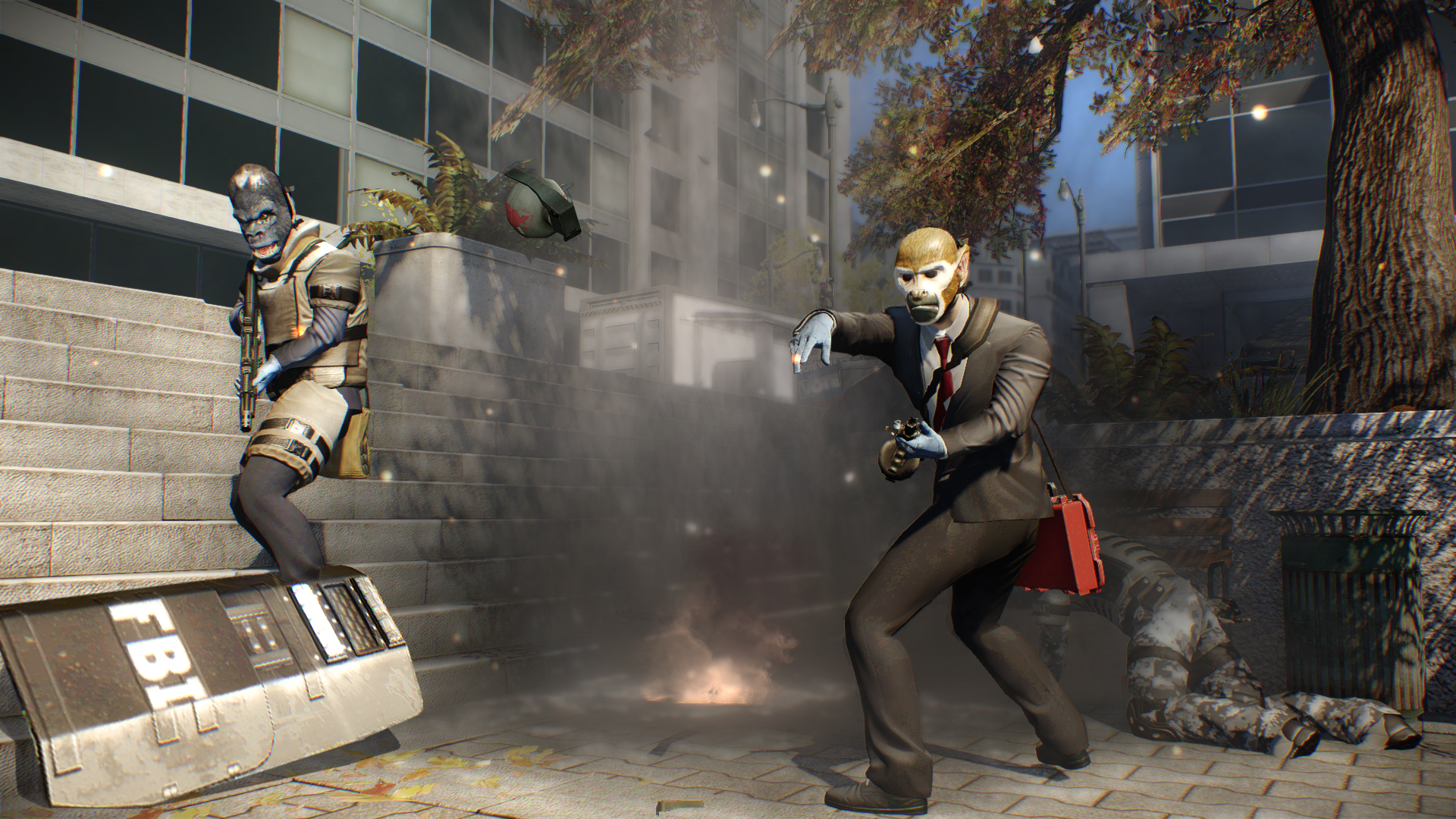 Atmospheric detail in PAYDAY 2.
Payday 2 sits closer to GTA V's model — mechanical variety and replay depth — but with a cooperative dimension that neither of those examples can match. The game has always been about the negotiation between players under pressure, and that negotiation is where it earns its reputation. When a stealth run falls apart on Murky Station and four players have to improvise an extraction while a SWAT van parks itself on the only exit, something genuinely interesting is happening. It is chaotic and loud and often unfair, and those qualities are, more or less, the point.
The skill tree problem, eleven years on
The build system in Payday 2 is enormous and, for a new player in 2025, genuinely hostile. There are ten character archetypes, over five hundred skill nodes spread across multiple trees, and a weapon modification system with more parts than most players will ever see. The game never really explains how these systems interact. Mastermind builds that lean into shout-down mechanics require a specific sequence of investments that no in-game text clearly maps out. You learn it from the wiki, from YouTube guides posted in 2018, or from a more experienced player who happens to be generous.
That is both a flaw and, perversely, part of the culture. The Payday 2 community has built an enormous body of external documentation that functions as an unofficial design layer. The game rewards mastery in a way that feels genuinely earned, and the opacity is partly responsible for that feeling. Compare this to how Larian handles systems complexity in Baldur's Gate 3 — tooltips everywhere, consequences modelled clearly, no hidden arithmetic. Payday 2 represents the older design philosophy where friction and obscurity were treated as depth. Whether that is charming or exhausting depends entirely on your patience.
The heist set-pieces that still hold up
Not all of Payday 2's one hundred and forty-odd heists are equally good. A significant chunk of the DLC catalogue is padding — corridor-clearing exercises that add mission variety without adding design interest. But the best heists in the game are as well-constructed as anything the genre has produced. The Firestarter job, which runs across three consecutive days, builds genuine narrative momentum through pure mechanical escalation. Shadow Raid remains the gold standard for solo stealth play: a large-footprint warehouse level with guard patterns, security camera rotations, and vault sequences that require actual spatial memory.
It is worth noting that some of Payday 3's vault-heist scenarios drew directly from the cinematic heist tradition — specifically the kind of precision-robbery set-piece where preparation matters more than firepower — but Payday 3 failed to recreate the systemic feel that makes its predecessor's best missions work. The difference is density. Payday 2's maps reward repeated runs with new information: an overlooked camera angle, a guard route with a vulnerability, a civilian position that changes the loud-vs-quiet calculus. The maps are not wide open, but they are layered. That layering is what the sequel never cracked.
The genre comparison that keeps nagging
The heist-game conversation in 2025 is richer than it was in 2013. Watch Dogs 2 brought social-engineering approaches to infiltration. Like a Dragon: Infinite Wealth gave Ichiban Kasuga a whole resort-island arc where the venue design itself becomes the obstacle — Sega continuing the tradition of embedding dense sub-systems inside a larger RPG in ways that feel substantive rather than decorative. The New Vegas Strip operates as a hub-zone with branching faction quests, and its best moments are less about combat than about information gathering and leverage — a different register of heist, but a heist nonetheless.
Against all of these, Payday 2 looks like what it is: a cooperative shooter that borrowed the aesthetic and some of the vocabulary of the heist genre without fully committing to its puzzle-box ambitions. That is not a criticism exactly. It committed to something else — sustained cooperative tension, class-based role specialisation, a genuinely anarchic feel when a plan collapses. Supergiant's games are a useful counterpoint here: Hades has the same 'repeated run, growing mastery' architecture, but every element of that game is tuned to communicate clearly. Payday 2 never cared much about clear communication. It cared about the feeling of the job going sideways.
What the 2025 updates actually add
The most recent DLC wave — which arrived across late 2024 and early 2025 — adds three new heists, two character packs, and an expanded weapon modification tree for shotgun builds. None of it is transformative. The new heists follow the established template: one stealth-viable map, one loud-only corridor, one hybrid. The character skills are cosmetically distinct but mechanically familiar. If you have four hundred hours in the game, you will find things to enjoy. If you are considering picking it up for the first time, the DLC is not the reason to do it.
The more interesting development is that Overkill has — quietly, over the last eighteen months — improved matchmaking significantly. Finding a lobby of players at Death Wish difficulty or above used to require either a dedicated crew or extended waiting. It is meaningfully faster now, which matters for a game whose design is built around cooperative friction. A solo Payday 2 run is functional but not the experience the game is architected around. Getting three players into Counterfeit within thirty seconds rather than eight minutes changes the game's texture considerably.
The verdict, such as it is
Payday 2 in 2025 is the gaming equivalent of a workshop that has been running for decades: crowded with tools, slightly disorganised, built by people who cared more about function than presentation. The UI is a mess. The onboarding is nonexistent. The economy — which involves multiple in-game currency tracks and a crafting system bolted on in 2016 — makes no coherent sense without external research. But underneath all of that, the cooperative loop is still one of the most pressurised in the genre, and the best maps are better than anything Payday 3 managed to build from scratch.
The question of whether it 'holds up' might be the wrong frame. Payday 2 was never polished. It was always dense, occasionally brilliant, and designed as though the players would figure it out eventually — and largely they did. What keeps it alive is not nostalgia but the particular thing it does that nothing else has successfully replicated: four players, one collapsing plan, and the specific chaos that follows. That is still here. Probably it will outlast Payday 3 entirely, which would be the most Payday 2 possible ending.
Editorial scoring
Reader Q&A
What's the standout set-piece in PAYDAY 2 like?
Mission-driven and well-paced. Multiple approach angles — stealth or loud — and consequences depend on enemy AI and scripted triggers. Most players settle into a rhythm by the second attempt.
How long is the major mission arc in PAYDAY 2?
Around 4-8 hours depending on how thoroughly you scout. The full campaign is significantly longer; this arc is one set-piece among many.
Do I need prior series knowledge before playing PAYDAY 2?
Most entries in this lineage stand alone. Helpful context if you've played the predecessors, but not required. Each title resets the player's frame of reference.
What makes a heist-style sequence land?
Sightline clarity, NPC density, audio cues, set-piece pacing. When all four align, the sequence is memorable. When even one's off — say, flat NPC behaviour — it falls flat.
Is PAYDAY 2 accessible to newcomers to the genre?
Generally yes. Systems are introduced gradually and difficulty is forgiving on default. Veterans will get more from the deeper systems, but the surface layer welcomes new players.
Which films influenced this design lineage?
Soderbergh's Ocean's Eleven, Mann's Heat, and Scorsese-era crime films are the obvious roots. Designers from this subgenre have cited those films in interviews going back twenty years.
Reader comments