Mafia: Definitive Edition earns its tragedy
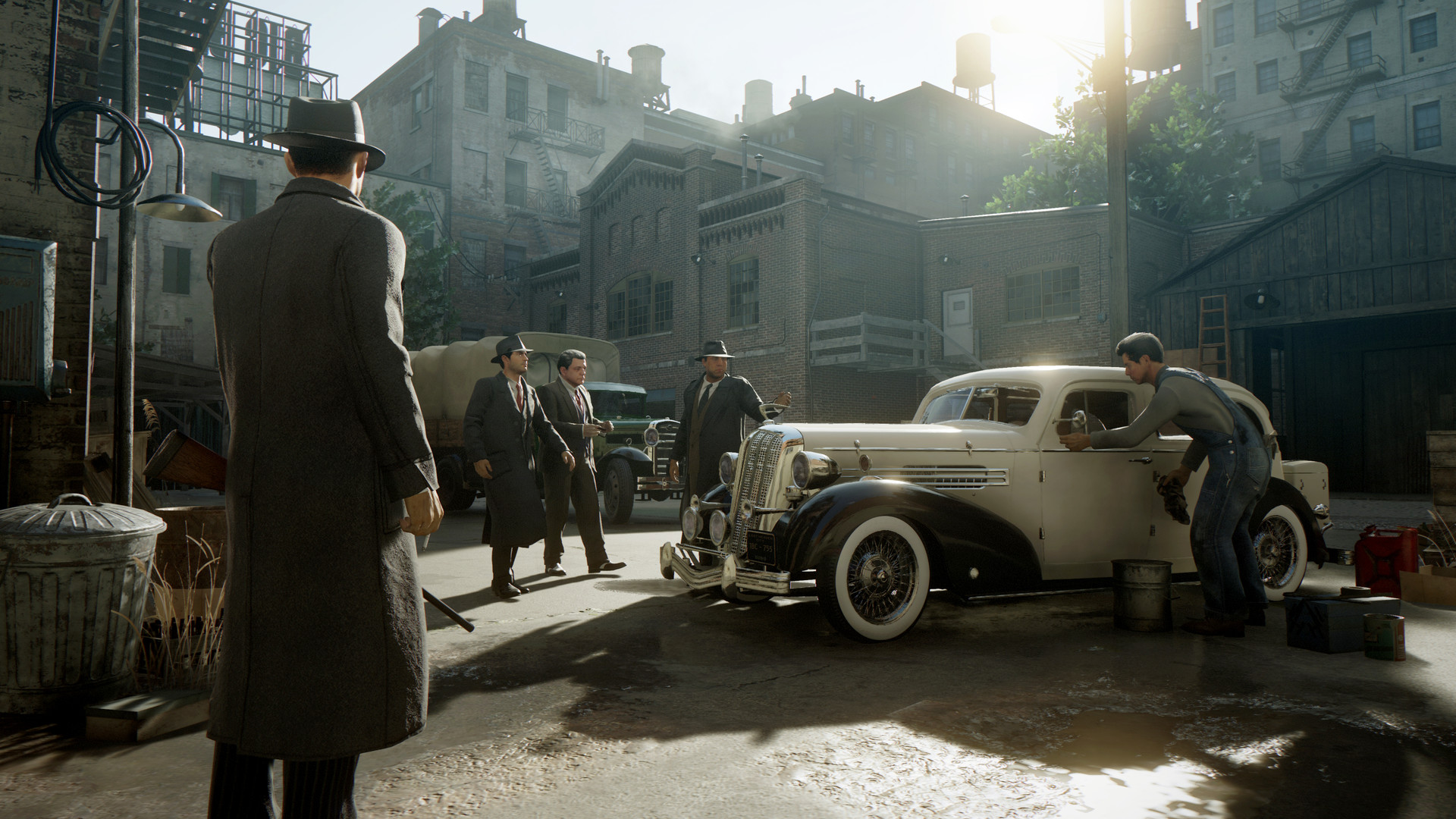
The original Mafia, released by Illusion Softworks in 2002, was a game that knew exactly what it wanted to be: a measured, melancholic crime story that moved at the pace of a long drive through a 1930s American city. It was not trying to out-GTA GTA. It had a different rhythm entirely. Hangar 13's 2020 remake, Mafia: Definitive Edition, keeps that ambition intact while rebuilding almost everything around it — new dialogue, expanded cutscenes, remodelled environments, a complete audio overhaul. The result is a game worth taking seriously, even where it stumbles.
Tommy Angelo's story has always been the draw. A cab driver who gets pulled into the Salieri crime family through a single bad night, watches the life seduce him, then pays for it over decades. That arc has not changed. What Hangar 13 did was pour resources into making it land with the weight it always deserved. Sometimes it works. Sometimes the seams between the old structure and the new production values show in ways that are hard to ignore.
A remake that respects its source material
Hangar 13 made one clear editorial decision early: this would not be a reboot. The beats of the original story are preserved — the horse racing chapter, the diner ambush, the long goodbye of the finale. New scenes add context and breathing room, particularly around Tommy's relationship with his wife Sarah and his friendship with Paulie and Sam. In the original, Sarah was barely a presence. Here she gets real dialogue, real warmth, and the game is better for it because it raises the personal cost of Tommy's choices.
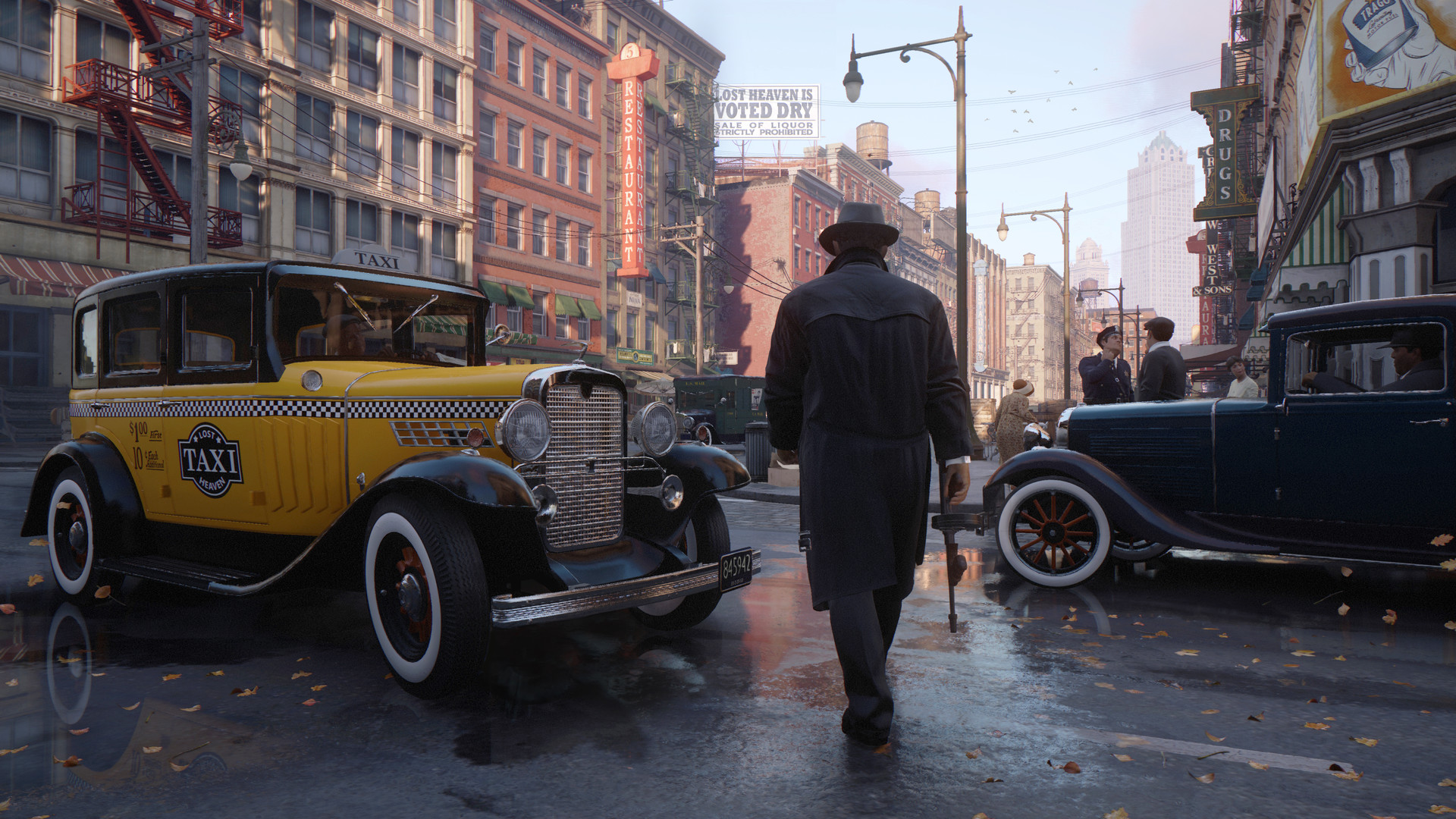 Atmospheric detail in Mafia: Definitive Edition.
The voice cast does serious work. Andrew Bongiorno plays Tommy as someone genuinely conflicted rather than just narrating regret. Salieri, voiced by Gordon Michaels, comes across as avuncular and terrifying in roughly equal measure — the kind of man who means every compliment and every threat simultaneously. A few supporting characters get flattened by the script's need to move quickly, but the core trio holds up across eighteen chapters of escalating damage.
Lost Heaven as a city, not a playground
Lost Heaven is rendered in genuine detail. The city is divided into distinct districts — Little Italy, Chinatown, the industrial waterfront — and each carries a visual identity that the 2002 original gestured toward but could not fully deliver at the time. The 2020 version can, and it does. Driving through the city at night, rain on the windshield, period-appropriate radio playing, feels like the closest thing to a noir film that is not actually a film.
What the city does not do is offer much reason to explore it outside of missions. There are collectibles, a handful of optional races, and some ambient traffic to navigate, but Lost Heaven is built for story delivery rather than systemic discovery. That is a defensible choice — it keeps the tone controlled — but players coming from Red Dead Redemption 2 or even the open-world crime games of the last decade will feel the narrowness. Hangar 13 seems to know this, and the optional Free Ride mode exists partly as an acknowledgment. It is a thin answer.
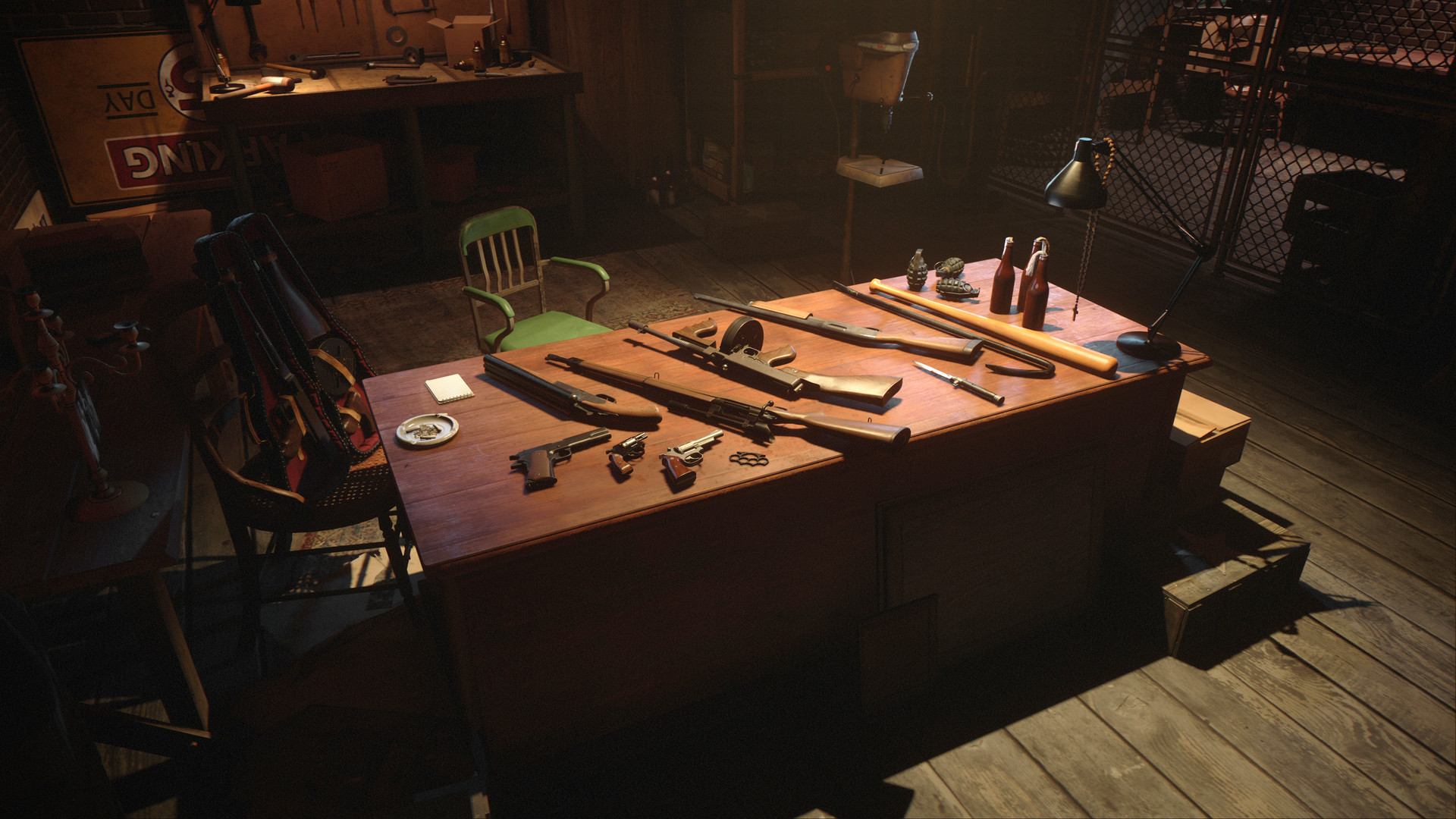 Combat encounter in Mafia: Definitive Edition.
Where the combat earns its keep
The shooting system is not sophisticated. Cover mechanics work, enemy AI behaves predictably at medium difficulty, and the weapon selection — period firearms like the Thompson submachine gun, the Colt Detective Special, a few shotguns — is limited by design rather than oversight. What the gunfights do have is consequence. Tommy takes damage fast. Enemies do too. Fights feel fragile in a way that suits a story about a man who is not a soldier.
A few missions lean too hard on combat in ways that break the story's tone. The Cathouse chapter, which involves a prolonged firefight across multiple floors, runs long enough to feel like padding. The airport sequence at the game's climax has a similar problem. These are not badly designed encounters, exactly, but they belong to a different register than the slower, more deliberate scenes that surround them. It is a tension the game never fully resolves.
Driving, by contrast, is one of the remake's genuine pleasures. The vehicles handle with enough weight that they feel like vehicles rather than arcade abstractions — early-game cars understeer through corners, later models respond faster. The city's traffic system enforces period-appropriate speed limits, and while the game gives you the option to turn off police pursuit for traffic violations, leaving it on changes the texture of every drive between missions. Getting pulled over while transporting something you should not be transporting adds a low-grade tension that works.
The tragedy, and whether it lands
The original Mafia earned its reputation on the strength of its ending — a quiet, brutal scene that refuses to let Tommy's story end anywhere comfortable. Hangar 13 keeps it, expands it slightly, and the additional dialogue does not dilute it. The game earns that final beat because it spent eighteen chapters making the cost of Tommy's choices visible in small ways before the large one arrives.
What the remake adds — and this is where opinions will diverge — is sentimentality. The original was fairly cold. Hangar 13's version is warmer, more invested in whether you like these people before it hurts you with them. That is not a wrong choice. It is a tonal shift that makes the story more accessible and, arguably, more emotionally functional for players who did not play the 2002 original. Whether it softens the impact is a genuine question. I found myself uncertain. The final chapter hits hard regardless. The path to it feels smoother than maybe it should.
Technical and structural notes
Played on PC, the game runs cleanly with a well-implemented set of graphical options. Performance held steady across four to five hours of continuous play. The checkpoint system is fair — mission restarts drop you close enough to the action that death does not punish you with five minutes of cutscene you have already watched. Loading times on an SSD are short enough to be unremarkable, which is the ideal outcome.
The one structural problem worth flagging is mission variety. Eighteen chapters covering roughly ten to twelve hours of gameplay means the game moves quickly, but several chapters follow the same template: drive to location, meet contact, things go wrong, shoot your way out. The script papers over the repetition better than the mission design does. A few missions break the mold — the race at the Salieri Racing Grand Prix is a legitimate highlight, and the art gallery chapter is tense in a different way than the combat sections — but the variety thins out in the middle third.
Who this is for
If you played the 2002 original and remember it fondly, this version respects what made it matter. It does not reinterpret or deconstruct. It reconstructs, with a larger budget and better tools, and mostly makes the right calls. If you never played the original, Mafia: Definitive Edition is a functional entry point — a crime drama with actual dramatic intent, paced deliberately, built around character rather than systemic content.
It is not a game without problems. The combat's uneven tonal fit, the city's relative emptiness outside missions, a middle act that coasts on goodwill — these are real issues. Hangar 13 is a studio with a complicated history, and this game represents something close to their best work, which makes the gaps more visible rather than less. You can see where more time or more courage might have filled them.
What holds is Tommy Angelo's fall. The details of it, the particular way this version renders a man rationalizing his way into a life he cannot exit — that still functions the way it should. Mafia: Definitive Edition is a crime story that trusts its ending, and in a genre full of games that mistake activity for meaning, that counts for something real.
Editorial scoring
Reader Q&A
How long does it take to finish Mafia: Definitive Edition earns its tragedy?
Main story runs around 60 hours depending on how thoroughly you explore. Completionists can spend 2-3× that.
Is Mafia: Definitive Edition earns its tragedy good for newcomers to Crime Drama?
It depends. The systems are deep but the tutorial does a fair job. Veterans of Crime Drama will feel at home faster.
Which platform should I play Mafia: Definitive Edition earns its tragedy on?
Steam Deck handles this title well — verified compatibility on most recent patches.
Was Mafia: Definitive Edition earns its tragedy worth the launch-day price?
If you're a fan of Hangar 13, yes. If you're new to the studio, a sale price is more comfortable.
Are there DLCs or expansions worth picking up?
Wait for the Game of the Year edition — it bundles everything at a fair discount.
What did Hangar 13 get right (and what could be better)?
The systems are confident and the combat is satisfying. The story handoffs and load times are the rough spots.
Reader comments