GTA V gave us three broken men and a world too alive to ignore
There is a moment early in Grand Theft Auto V where Michael De Santa, recently relocated to Rockstar's version of Los Angeles and supposedly retired from a life of armed robbery, sits by his pool in a bathrobe watching his family ignore him. It is not interactive. You cannot skip it. And it tells you more about the game's ambitions than any of the heists that follow. Rockstar has always been comfortable with spectacle, but GTA V, released in 2013 and still — somehow — commercially alive a decade-plus later, tries something different: it is interested in the texture of unhappiness.
The game's structure is familiar enough. You have a vast open world, missions that funnel you through shootouts and chases, a wanted system that scales with your chaos, and a radio dial packed with satirical adverts. But the formula is almost incidental to what makes GTA V worth talking about. The bones are the bones. What stays with you is the three men stuck inside them.
Three protagonists, one very specific kind of damage
The decision to split the protagonist role across Michael, Trevor Philips, and Franklin Clinton was risky, and it mostly works. Michael is your mid-life crisis in a sports car — wealthy, resentful, kept at arm's length from everything he thought money would fix. Franklin is younger, hungrier, and aware enough to see that the people above him on the food chain are not living any better. Trevor is something stranger: a man performing the id of every GTA player fantasy, stripped of irony, and made genuinely uncomfortable to be around.
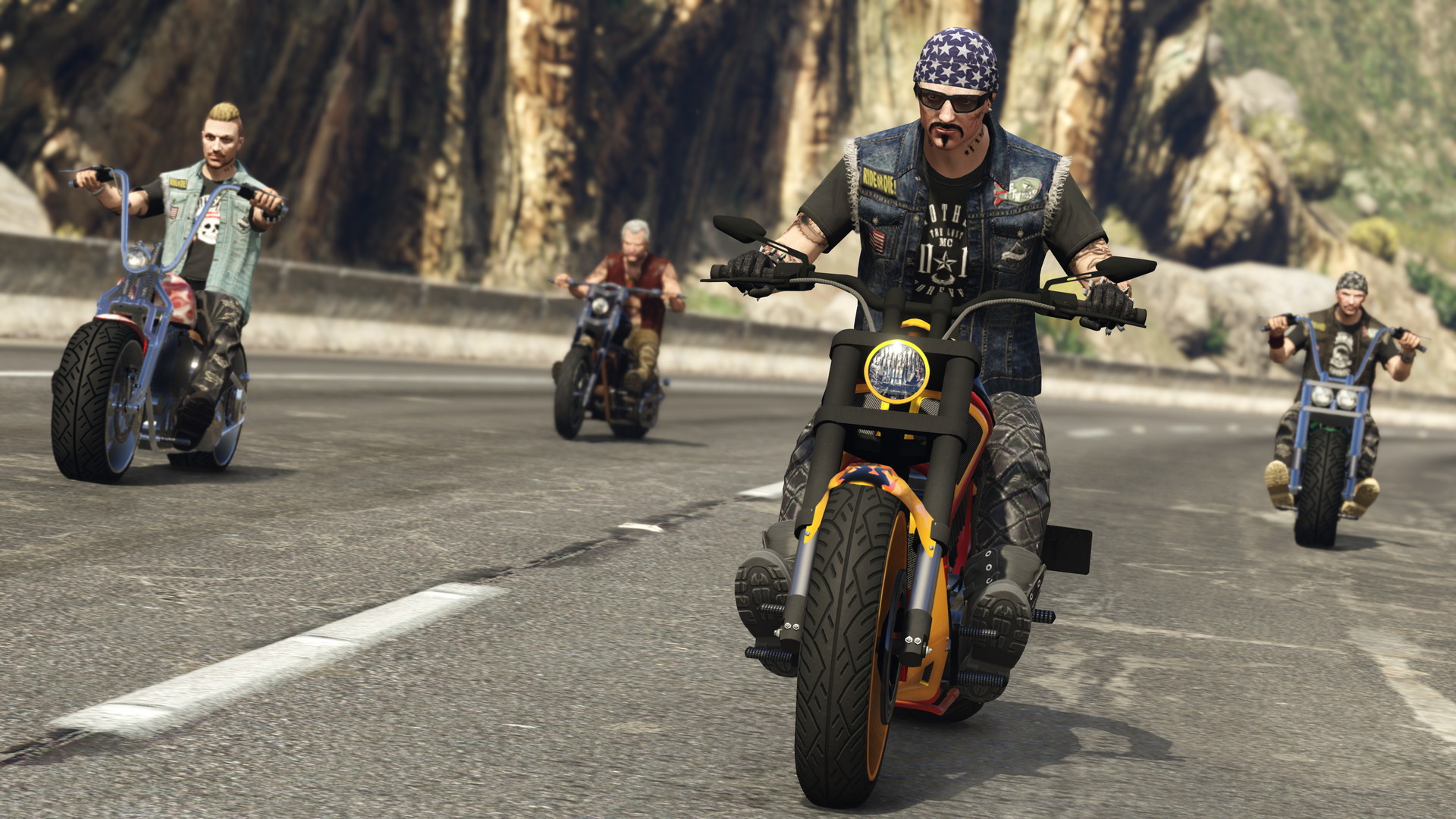 Atmospheric detail in Grand Theft Auto V.
What the trio does, mechanically, is let Rockstar cover different registers of the same city. Franklin fits comfortably into the street-level hustle missions. Michael anchors the heist-planning sequences and the more cinematic action set-pieces — the game's version of Heat-style professionalism, if not always the execution. Trevor handles the unhinged fringes, the desert, the volatility. The on-the-fly character switching, which lets you jump between them almost in real time, is not just a gimmick. It creates moments where you check in on a protagonist mid-errand and catch them doing something small and specific — sitting outside a convenience store, staring at the ocean — that no mission scripted.
Los Santos as a city that does not care about you
The map is enormous, which is not the compliment it sounds like. A lot of open worlds are enormous in ways that feel defensive — filling space to justify the runtime, padding a skeleton with activities that exist to exist. Los Santos has that problem too in places. But it also has blocks that feel genuinely designed to be walked past rather than interacted with. The Pacific Bluffs neighbourhoods with their passive-aggressive yoga practitioners, the downtown construction sites, the way the freeways stack on top of each other and channel traffic in ways that feel like a city planner's decision rather than a game designer's.
The NPC ecosystem carries this. Pedestrians have arguments mid-walk, drop context-specific lines based on where they are, react differently in Vinewood versus the Strawberry district. It is not Dwarf Fortress — the simulation is shallow — but it is dense enough that you can spend twenty minutes doing nothing useful and still leave with the impression of a place. The ambient world-building here is closer to what Rockstar did with Red Dead Redemption 2's Blackwater and Saint Denis than what most of GTA IV's Liberty City managed. A city that feels like it has an economy and a social hierarchy operating outside your involvement.
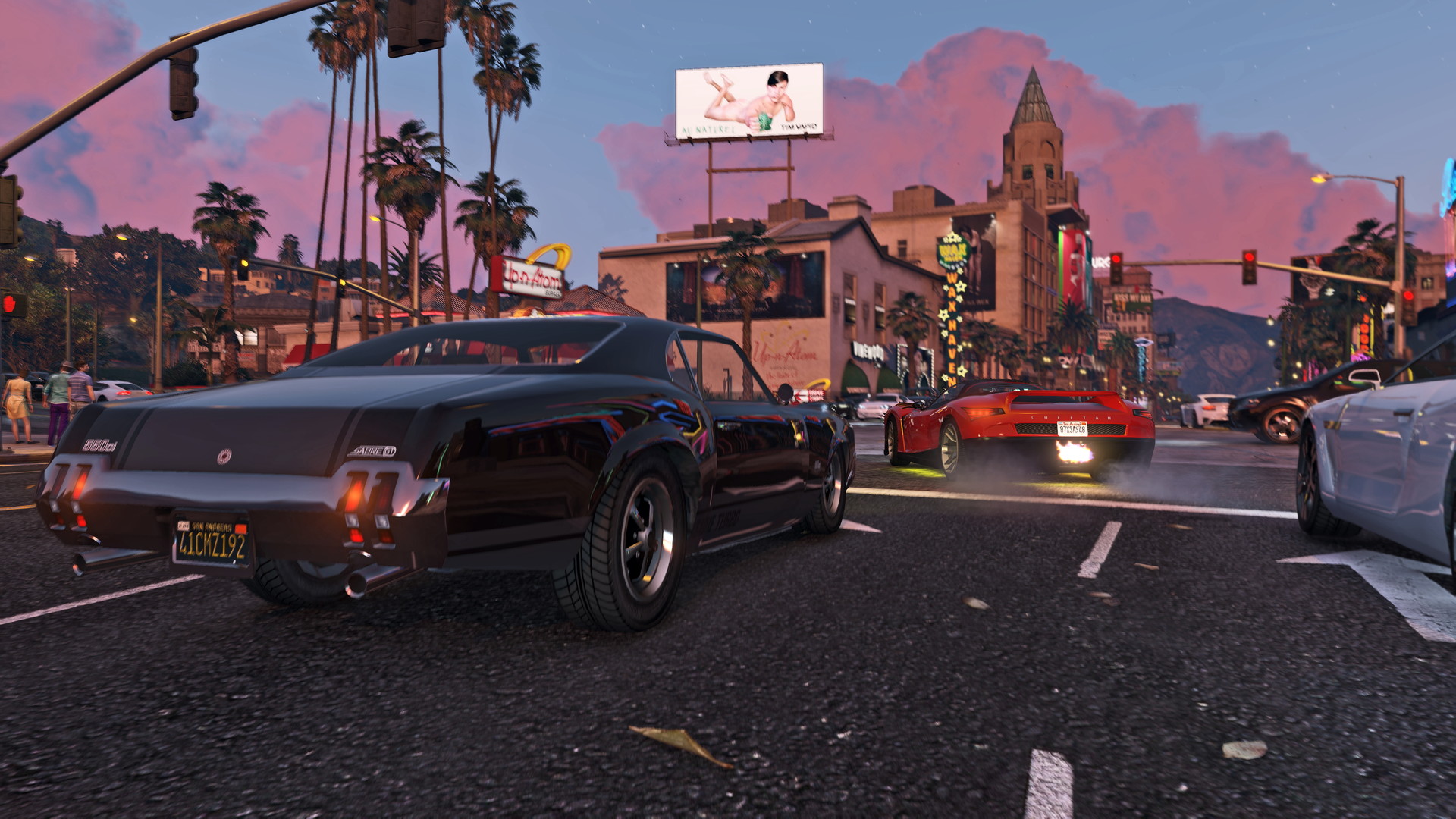 Combat encounter in Grand Theft Auto V.
The heists are good, actually, but not always for the reasons the game thinks
GTA V's heists were marketed as the centrepiece, and they are technically impressive. The Paleto Score, which sends you through a small-town bank robbery straight into a military response, is constructed like an action film setpiece: escalating, chaotic, funnier than it should be. The Union Depository finale has a cool-handed efficiency that genuinely feels earned after the planning sequences that precede it.
What is less convincing is the choice architecture around them. Each heist offers an approach — aggressive or subtle, roughly — and the split mostly affects surface detail rather than dramatically changing how the mission plays. The subtle approach to the Jewel Store Job uses knockout gas and getaway bikes; the loud approach uses armoured cars and guns. Both end up in roughly the same place. The game gives you the feeling of strategic agency without quite delivering the mechanical depth that would make those choices genuinely consequential. It is a valid criticism, though maybe an unfair one — the heists are still the best mission structure Rockstar had built to that point.
What the open world gets right at the small scale
The strangers-and-freaks missions — optional encounters with peripheral characters — are quietly where the writing is most adventurous. Tonya and JB, two crack-addicted tow truck operators whom Franklin keeps bailing out, manage to be genuinely sad without being exploitative. The Epsilon Program questline, which sends Michael through an increasingly absurd cult indoctrination, is the sharpest satire in the game and deliberately frustrating in a way that pays off if you let it run to completion.
The ambient activities — tennis, yoga, stock trading, property investment — function more as world texture than engaging systems on their own terms. Yoga is essentially a rhythm mini-game dressed up in Malibu condescension. The stock market mechanic is intriguing in concept, since some missions move specific fictional companies' share prices and you can front-run the effect, but in practice the causality is too blunt to feel like genuine financial play. It all serves the atmosphere of Los Santos as a place obsessed with performance and self-improvement, even if the systems themselves are thin.
Online, and the decade-long complication it created
GTA Online launched alongside the base game in 2013 and has since become the thing that eclipsed it commercially. The live-service model — with its rotating content drops, premium currency, and sprawling vehicle catalogues — has kept the game financially viable in ways few titles have managed. It has also, fairly or not, shaped how a lot of players now remember GTA V: as a platform for Online rather than a story.
The single-player has never received story DLC, a decision that still stings a little. The three endings — including one where the protagonists survive together by taking out their antagonists — are satisfying enough, but there is a sense of unfinished space around Michael and Trevor's arc that a well-designed expansion could have occupied. Rockstar clearly made a calculation, and it was probably the correct one from a business standpoint. That does not make it the right creative call.
The version you play now is not quite the version from 2013
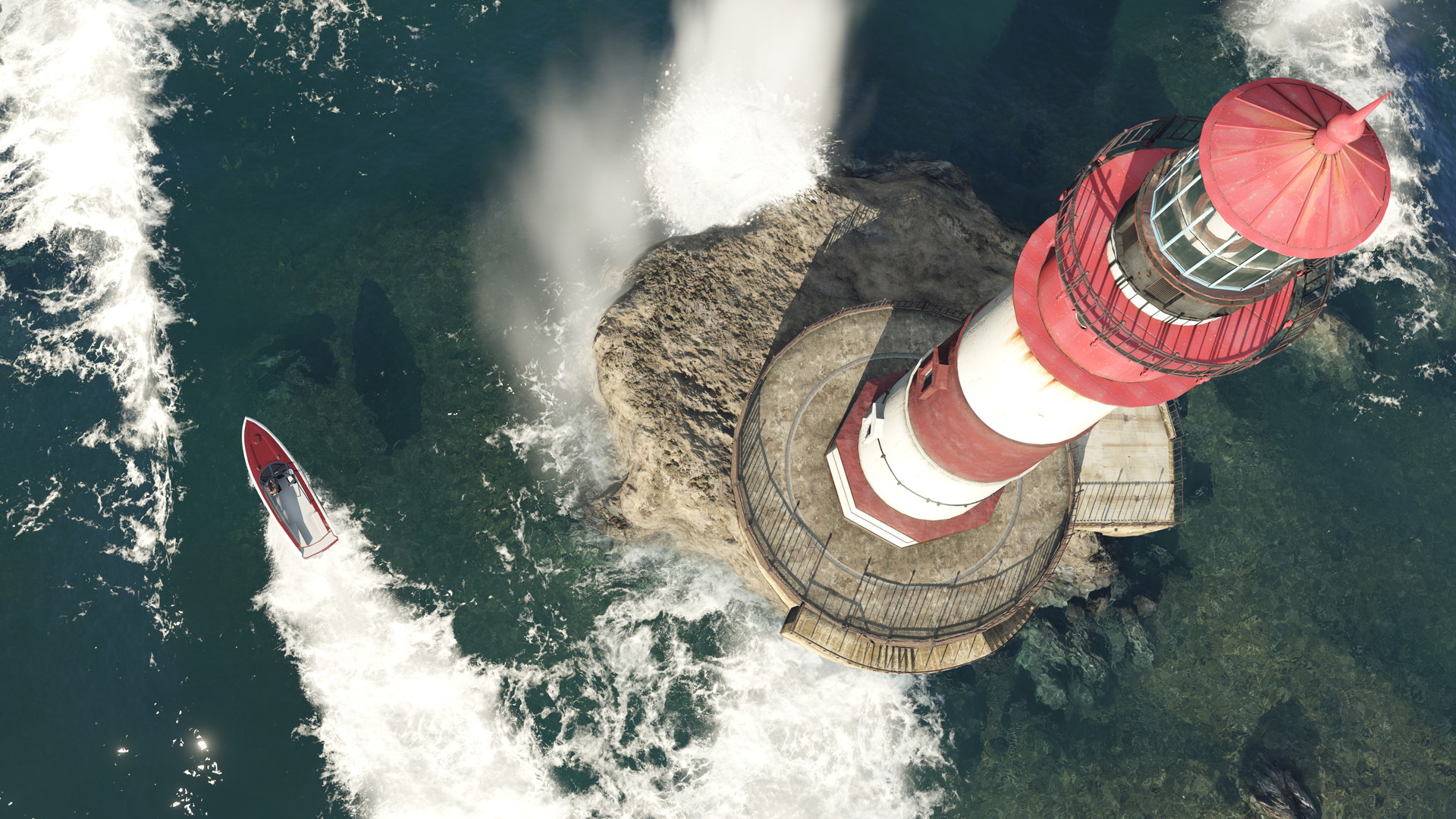
GTA V has been released on five platform generations at this point, and the current-generation version adds features — improved loading times, ray-traced lighting options, a first-person exploration mode that remains one of the stranger ways to experience a Rockstar open world — that do change the feel. The enhanced textures on Los Santos' hillside estates and the reflections on the Pacific coastline at dusk make the already-strong environment direction more persuasive. Performance mode at 60 frames per second also makes the driving — still the best moment-to-moment movement system in the series — feel noticeably sharper.
Whether that justifies purchasing the game again is a question only you can answer, and Rockstar's pricing strategy across these re-releases has not always been generous to players who already owned earlier versions. The upgrades are real but incremental. The core experience — Michael in his bathrobe, Trevor in his trailer, Franklin on the corner in Strawberry — has not changed. Nor has the fact that those three characters, despite existing in a game full of surface-level cynicism and shock humour, are written with more genuine interiority than most action protagonists get.
GTA V is not a perfect game, and it has never needed to be. What it is, more than a decade past its original release date, is a demonstration that a world built with enough density and enough feeling for its own internal logic can outlast almost any genre trend. The heists age unevenly. The satire occasionally tips into smugness. But put a controller in someone's hand, drop them into Los Santos for the first time, and you will watch them spend twenty minutes just driving along the coast before they remember there are missions to do. That is not an accident.
Editorial scoring
Reader Q&A
How long does it take to finish GTA V gave us three broken men and a world too alive to ignore?
Main story runs around 85 hours depending on how thoroughly you explore. Completionists can spend 2-3× that.
Is GTA V gave us three broken men and a world too alive to ignore good for newcomers to Open-World Action?
It depends. The systems are deep but the tutorial does a fair job. Veterans of Open-World Action will feel at home faster.
Which platform should I play GTA V gave us three broken men and a world too alive to ignore on?
Console version is the most stable on launch. PC version benefits from the modding scene long-term.
Was GTA V gave us three broken men and a world too alive to ignore worth the launch-day price?
Depends on backlog. The replay value justifies the price for genre fans; casual players should wait for a 40%+ discount.
Are there DLCs or expansions worth picking up?
Wait for the Game of the Year edition — it bundles everything at a fair discount.
What did Rockstar Games get right (and what could be better)?
Strongest: art direction, audio design, set-piece variety. Weakest: late-game balance and a few persistent quest-log bugs.
Reader comments