Phantom Liberty proves Cyberpunk finally became what it promised
Cyberpunk 2077 launched in December 2020 as one of the most spectacular implosions in modern gaming history. CD Projekt Red had promised a living, reactive city, a role-playing system with real consequence, and a narrative dense enough to justify years of hype. What players got on last-gen consoles was, charitably, a construction site. The game was pulled from the PlayStation Store. Refunds were issued. The studio's share price dropped sharply. For a while, it felt like a permanent cautionary tale about over-promising.
Phantom Liberty, the 2023 expansion, is not just a redemption arc dressed up in DLC clothing. It is evidence of what the base game was quietly becoming through years of patches — and then a hard push past that plateau into territory the original release never reached. The expansion is set almost entirely in Dogtown, a sealed-off district of Night City run by a warlord named Songbird promises President Myers safe extraction, and V gets pulled into the middle. It is spy fiction, morally tangled, and mechanically sharp in ways that the 2020 launch was not. Worth examining, then, not whether it 'redeemed' the franchise — that framing is tired — but which specific parts of the design actually hold up when you put real hours into it.
Dogtown as a Design Choice, Not Just a Setting
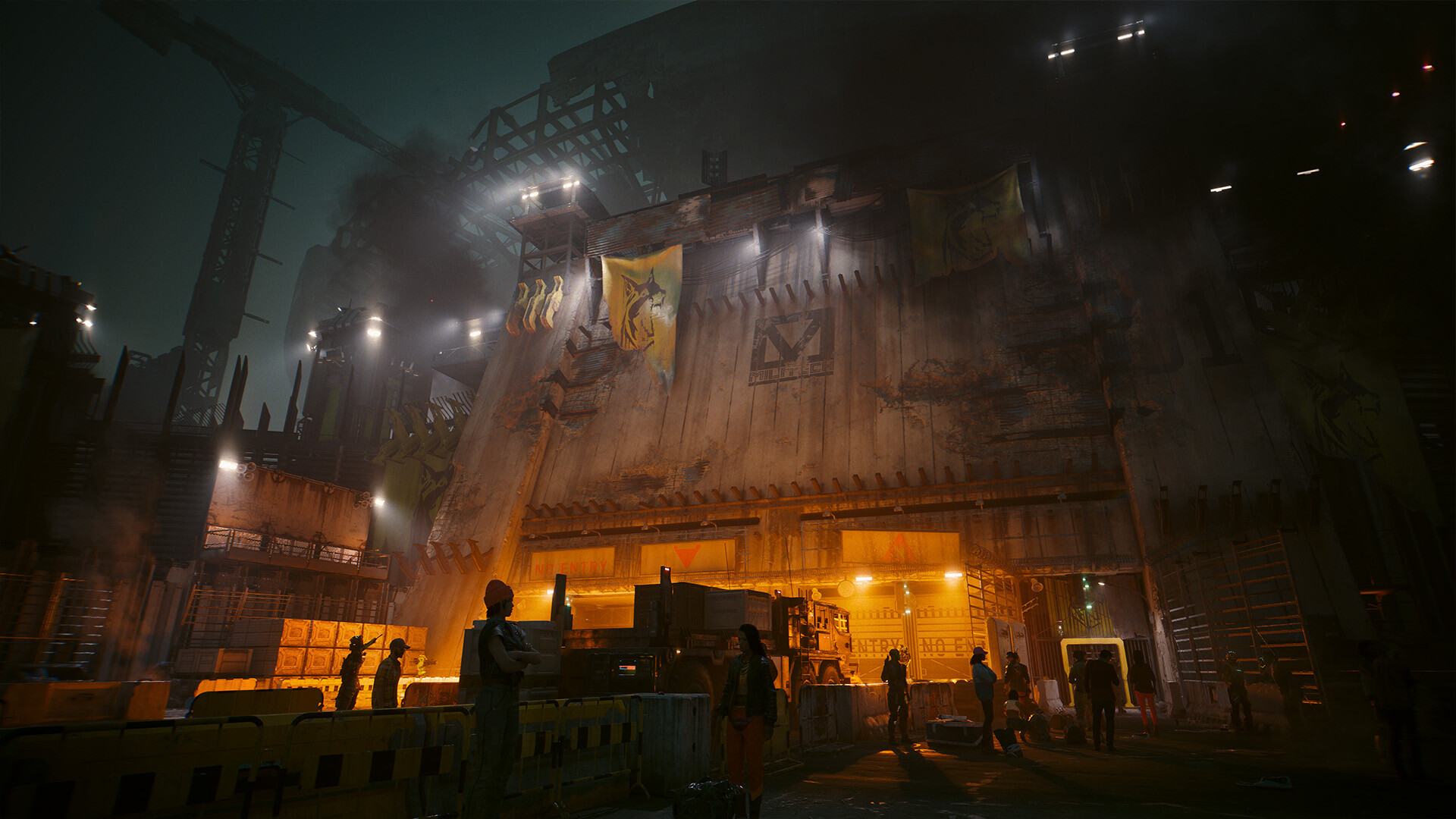
Night City's base districts have always been aesthetically impressive and functionally inconsistent. Dogtown is smaller, denser, and more deliberately authored. Because it is a controlled zone — no NCPD presence, checkpoints at every entry — CD Projekt Red could build a space where the environmental storytelling and faction logic actually cohere. You believe that FIA operatives would operate here. You believe the place has its own black market economy. The loot scattered through collapsed buildings feels earned rather than procedurally dropped.
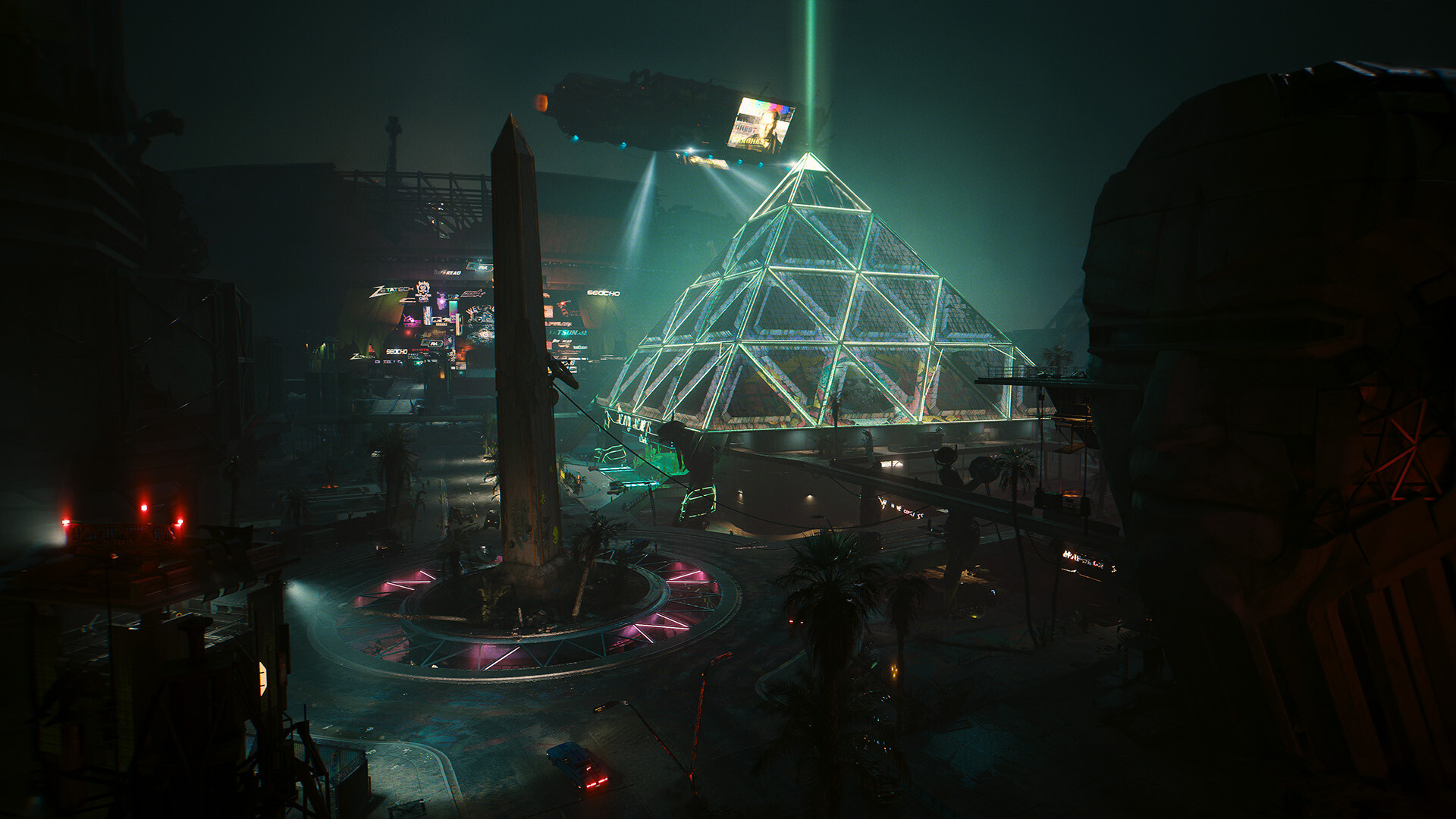 Scene from Cyberpunk 2077: Phantom Liberty.
The verticality deserves specific credit. Dogtown uses its ruined stadium and stacked brutalist architecture to create sightlines and flanking routes that make stealth and combat feel genuinely different depending on how you approach. Compare this to some of the flattest areas of Watson in the base game, where level design was often just corridor-and-cover. Here, optional combat arenas reward players who invest in movement-based perks — notably the Phantom Liberty-era 'Berserk' cyberware rework, which makes melee feel less like a desperation option and more like a legitimate aggression system.
None of this is accidental. The design team clearly used the expansion's limited geography as a constraint that forced authorial decisions the open-world mandate had previously diluted. Tighter spaces, more handcrafted encounter layouts, fewer 'walk to icon, receive content' missions.
The Skill Tree Overhaul Nobody Talked About Enough
Phantom Liberty shipped alongside the 2.0 update, which rebuilt Cyberpunk 2077's progression system from the ground up. This is where the game's critical coverage got uneven — reviewers praised the expansion's story but the mechanical overhaul, which affects every hour of play including the base game, received comparatively little scrutiny. That is worth correcting.
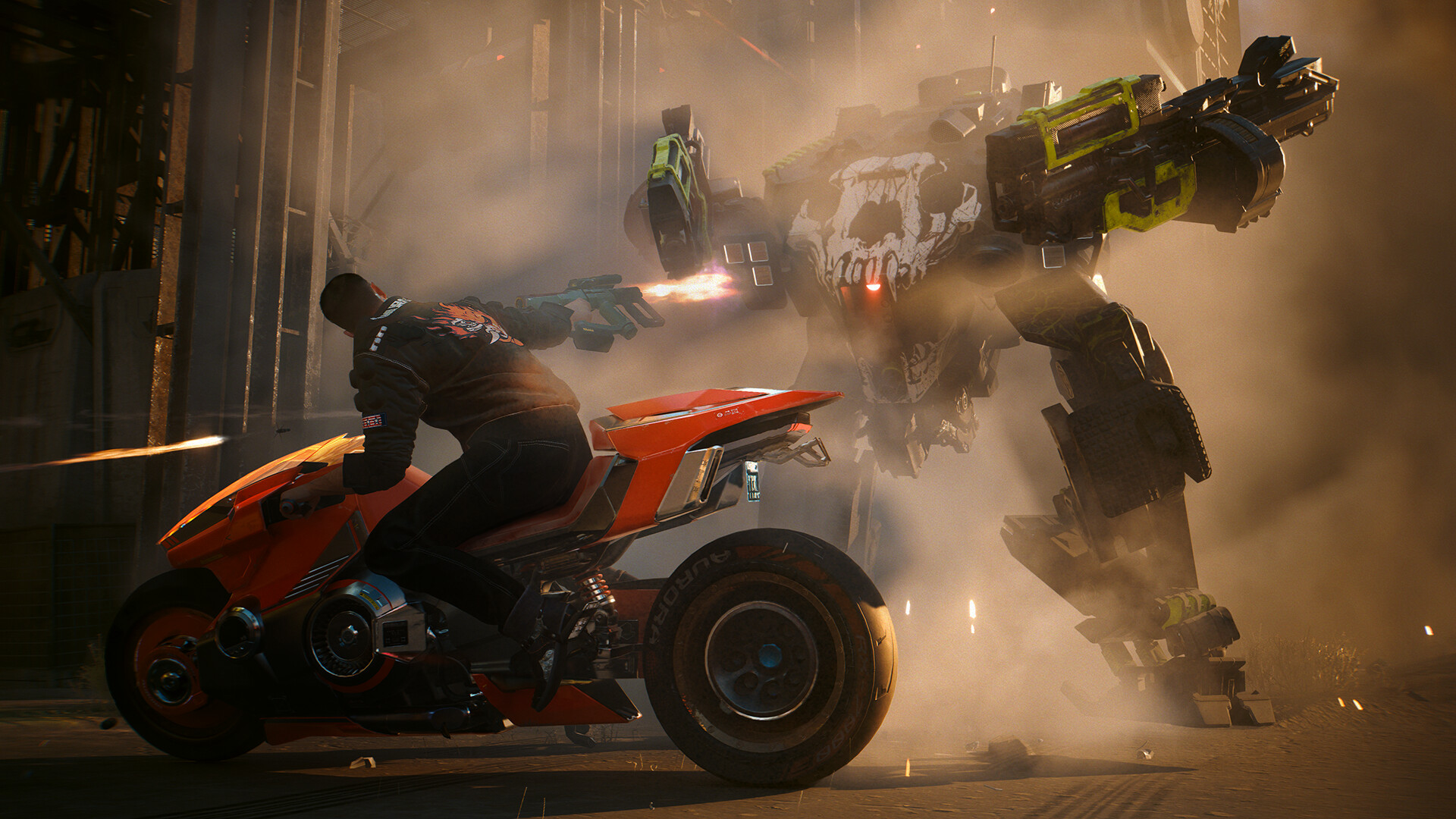 Scene from Cyberpunk 2077: Phantom Liberty.
The old system let you spread attribute points across five categories while unlocking perks in overlapping, often redundant trees. Post-2.0, the trees are leaner and the perks are more architecturally interesting. The 'Cool' tree, governing stealth and precision, now includes a perk called 'Ninjutsu' that eliminates fall noise during stealth sequences and pairs meaningfully with a separate 'Crouching Tiger' perk that accelerates crouch movement. These are not isolated bonuses. They create playstyle identities. That kind of systemic coherence is what separates a functional RPG from one where builds feel arbitrary — it is what Larian does exceptionally well in Baldur's Gate 3, and it is what Cyberpunk 2077 was notably failing at in 2020.
Cyberware now draws from a capacity pool per body slot rather than being gated purely by money and availability. It is a small change that has large downstream effects: you are making tradeoffs, not just accumulating power. The Sandevistan — the slow-motion time dilation implant made famous by the Edgerunners anime — becomes genuinely interesting to spec around rather than a best-in-slot obvious pick.
What the Writing Actually Gets Right
Phantom Liberty's main cast is small by design. Reed, a burned FIA agent voiced by Idris Elba, is the kind of character who could easily become a noble-soldier cliché. He does not, partly because the script keeps undercutting his idealism with evidence that his loyalty to institutions has cost him things he cannot get back. Songbird, meanwhile, is a more complex construction than almost any character in the base game — someone whose sympathetic surface conceals decisions that the player gradually has to reassess.
The expansion has four possible endings to its main quest, and they diverge not through a final binary choice but through a series of decisions spread across the final act. This is meaningful. Games that front-load player agency only to funnel everything into a last-minute selector — a problem the Mass Effect series spent three games wrestling with — feel dishonest about what choice costs. Phantom Liberty's structure makes you feel like you have been building toward your ending, not just picking from a menu.
That said, some of the side content around Dogtown's fixers is thinner. A few of the gig missions in the area feel like base-game filler that did not get the same polish pass as the main quest. It is a minor complaint against a mostly tight package, but worth flagging for anyone who plans to chase one hundred percent completion expecting the same quality throughout.
Where the Game Still Asks for Patience
Night City's AI remains the most obvious unresolved problem. Pedestrians and drivers react to combat with the same flat panic routines they had in 2020. Police response, improved by the 2.0 update's wanted system, is better than it was but still mechanical in ways that break immersion if you look directly at it. FromSoftware games do not need sophisticated civilian AI because they do not promise a living city. Cyberpunk does, and the gap between that promise and the reality has simply narrowed rather than closed.
The Relic ability tree, new to Phantom Liberty, adds three genuinely useful combat skills including Vulnerability Analytics, which marks weakpoints on enemies mid-fight. It is solid. But the tree is also notably short compared to the rebuilt base trees, and it levels up through a Relic Point currency that you accumulate by finding hidden caches in Dogtown. The scavenger hunt structure is fine, but the tree runs out of things to offer faster than it should. It feels like a system that was scoped down late in development.
Performance Across Platforms
On PC with a mid-range setup — RTX 3070, 32GB RAM — Phantom Liberty runs cleanly at 1440p with path tracing disabled. Enable DLSS Quality mode and the visual fidelity holds without significant framerate penalty. The optimization work done between 2020 and 2023 is not trivial; this is a genuinely different engine experience than the launch build. On PlayStation 5 and Xbox Series X, performance mode targets 60fps and largely achieves it, with occasional dips in the most particle-heavy combat sequences.
The PC version remains the best way to experience the game if your hardware allows it. Ray reconstruction, which arrived in a post-launch update, transforms the lighting in interior spaces in ways that are difficult to oversell — the Voodoo Boys' base, the underground market corridors in Dogtown, even V's apartment feel like different spaces. It is the rare visual technology upgrade that actually changes how an environment reads narratively.
What Changed and Why It Matters
The version of Cyberpunk 2077 that exists now — patched base game plus Phantom Liberty — is not the game CD Projekt Red shipped three years ago. That is not a defense of how the launch was handled. But it does matter for how we evaluate the thing in front of us. A game is what it is when you play it, not what it was when it shipped, and right now this is one of the more mechanically ambitious open-world RPGs available.
The comparison that keeps surfacing is No Man's Sky, Hello Games' long rehabilitation from a similarly catastrophic launch. Both cases raise uncomfortable questions about launch standards and player patience. The difference is that Phantom Liberty is not just a patch — it is a substantive creative addition that makes the whole enterprise feel intentional rather than corrective. CDPR did not just fix what was broken. They built something worth the rebuilt foundation.
Whether the studio can carry this forward into The Witcher 4 without repeating the same cycle is an open question nobody can honestly answer yet. For now, Phantom Liberty stands as specific proof that the gap between an ambitious pitch and an actual game can be closed — if the studio is willing to spend years doing it properly the second time.
Editorial scoring
Reader Q&A
How long does it take to finish Phantom Liberty proves Cyberpunk finally became what it promised?
Main story runs around 32 hours depending on how thoroughly you explore. Completionists can spend 2-3× that.
Is Phantom Liberty proves Cyberpunk finally became what it promised good for newcomers to Open-World RPG (DLC)?
Yes — Phantom Liberty proves Cyberpunk finally became what it promised is a great entry point. The early hours teach the systems gradually and the difficulty curve is reasonable.
Which platform should I play Phantom Liberty proves Cyberpunk finally became what it promised on?
Console version is the most stable on launch. PC version benefits from the modding scene long-term.
Was Phantom Liberty proves Cyberpunk finally became what it promised worth the launch-day price?
If you're a fan of CD Projekt Red, yes. If you're new to the studio, a sale price is more comfortable.
Are there DLCs or expansions worth picking up?
Skip the cosmetic DLC. The story expansion is the only one we'd recommend at full price.
What did CD Projekt Red get right (and what could be better)?
The systems are confident and the combat is satisfying. The story handoffs and load times are the rough spots.
Reader comments