Baldur's Gate 3 hands you a world and waits to see what you break
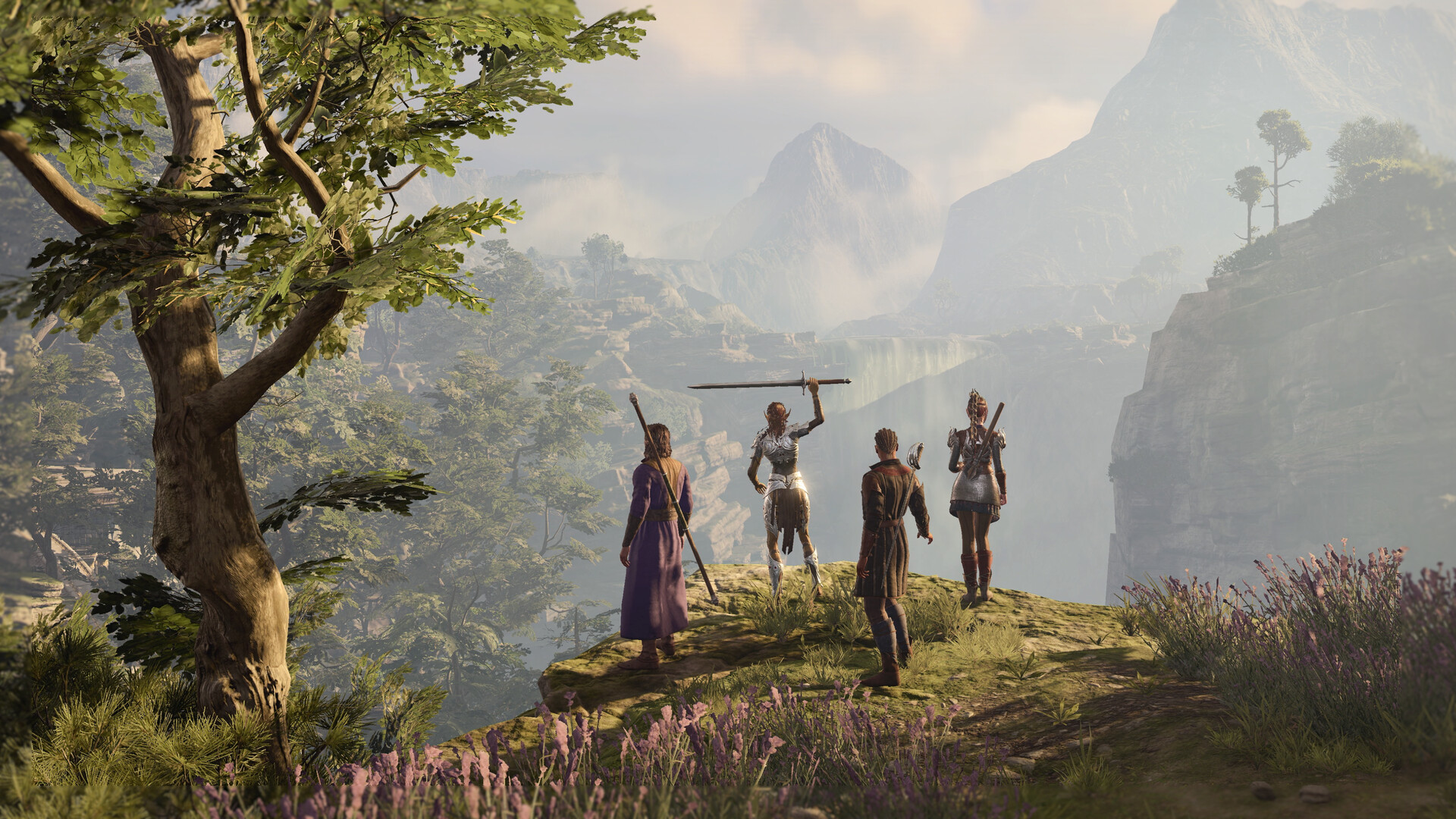
There is a moment somewhere in Act Two of Baldur's Gate 3 where you realize the game has been watching you more carefully than you thought. A choice you made thirty hours ago — an offhand decision, maybe something you did mostly out of curiosity — resurfaces with real consequences. The world didn't forget. Most games would have. That moment, more than any dice roll or voiced cutscene, explains why Larian's RPG landed the way it did.
Released in full in August 2023 after three years in early access, Baldur's Gate 3 is the kind of game people will still be arguing about in a decade — not because it's perfect, but because it's enormous and opinionated and genuinely committed to letting you play it wrong. It is also, in places, a bit of a slog. Both things are true.
The architecture of freedom
What Larian built is essentially a reaction machine. Every major quest space — the Underdark, the Shadow-Cursed Lands, the city of Baldur's Gate itself — functions like a problem with twenty valid approaches. You can talk your way past the githyanki patrol. You can polymorph your wizard into a cat and just walk past them. You can pick a fight, which will go badly for you at level four, but that's your call. The game enforces very few sequences. It trusts you to find the seams.
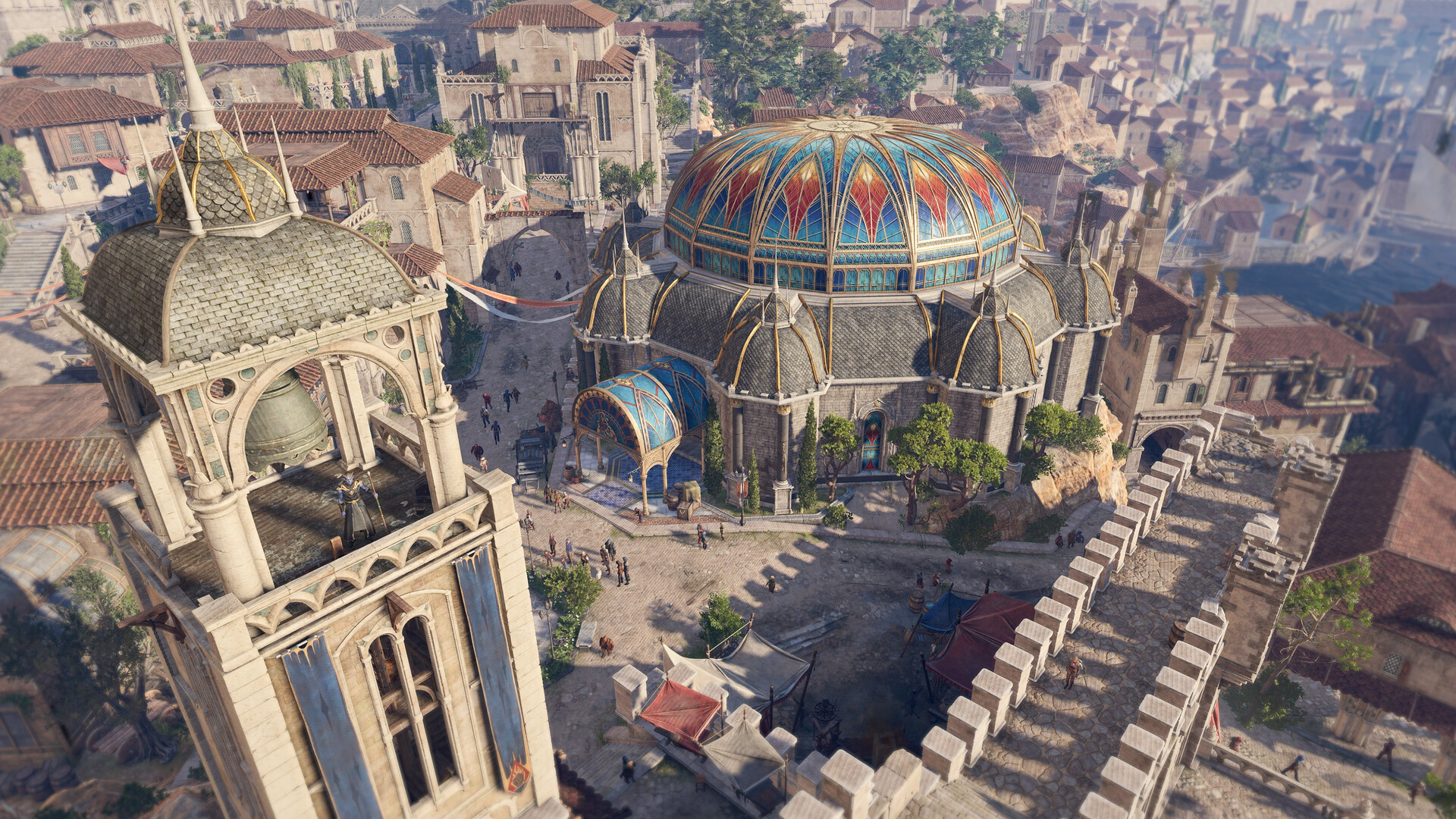 Scene from Baldur's Gate 3.
The structural comparison that keeps coming to mind is Divinity: Original Sin 2, Larian's own previous title, which had similar reactive ambitions but felt more obviously gamified — elemental surface combos that dominated every encounter, a magic armor system that split players sharply into fans and skeptics. BG3 runs on a modified version of D&D 5th Edition rules, and that framework actually helps. Players who know the tabletop will have a vocabulary to read the system. Players who don't will still intuit that hitting a creature with a wet surface and then casting a lightning bolt probably does something interesting. The rules feel legible.
Combat that earns its difficulty — sometimes
Tactically, the turn-based combat is frequently excellent. High-ground advantage, surface hazards, flanking, concentration spell management — positioning matters in ways that XCOM players will recognize immediately. The encounter in the Goblin Camp, early in Act One, is a nice example: the room gives you vertical space, multiple enemy types, and a boss who can rally nearby units if you let her, all of which rewards you for reading the battlefield before your first move rather than charging in.
Where it gets shakier is in the middle section. Act Two, centered on Moonrise Towers and the Gauntlet of Shar, has some of the game's most atmospheric design, but it also has stretches where combat starts to feel repetitive before the narrative has given you enough payoff to justify the grind. A few encounters feel more like attrition tests than tactical puzzles — throw enough concentration spells at the problem and eventually it dissolves. This isn't a fatal flaw, but players who came for role-playing over resource management may find their attention drifting around the forty-hour mark.
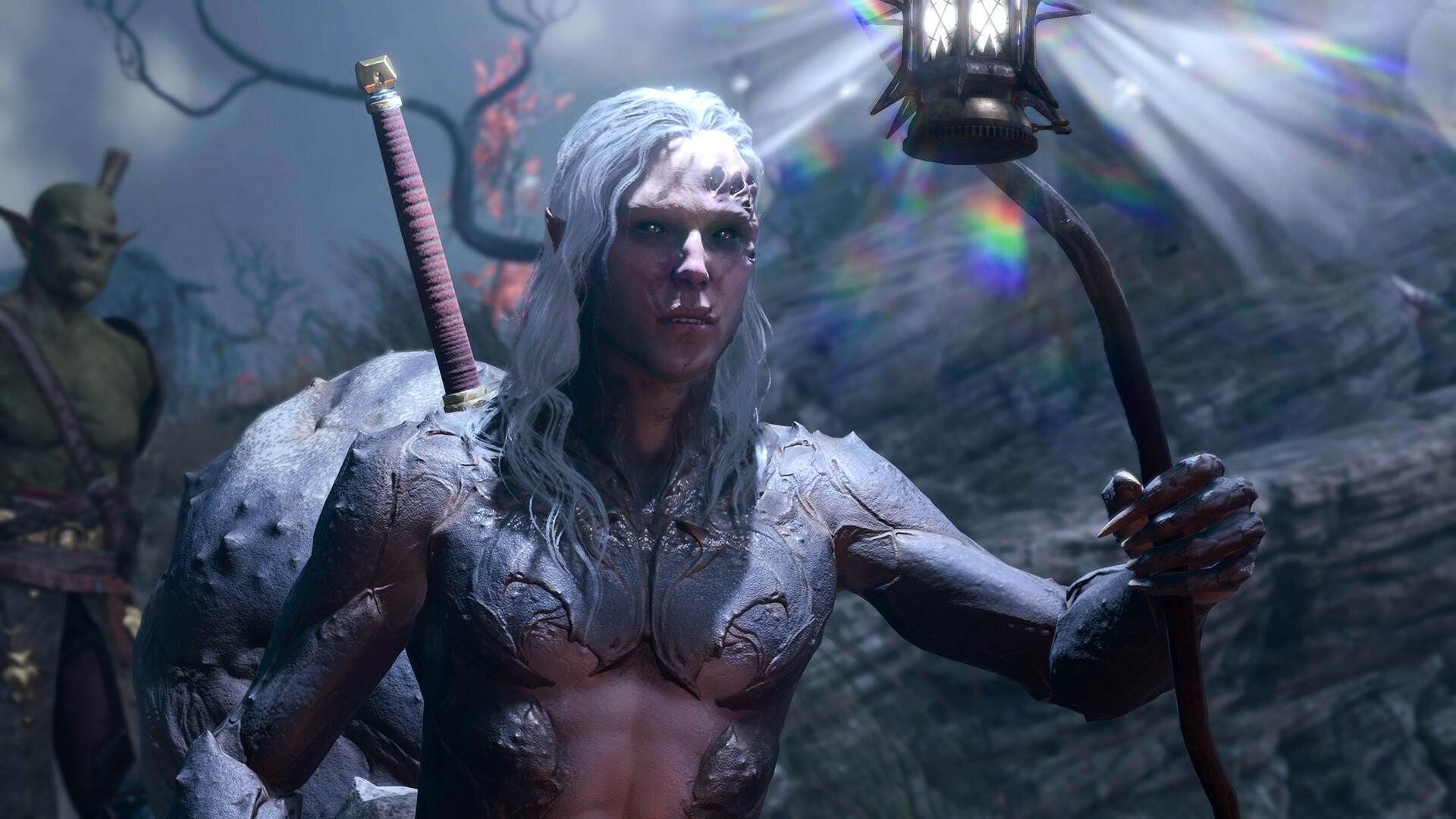 Scene from Baldur's Gate 3.
The companions, or: the actual game
The six origin companions — Shadowheart, Astarion, Gale, Lae'zel, Wyll, and Karlach — are the clearest argument that Larian understood what it was actually making. This is, at its core, a game about a group of people with parasites in their skulls trying to figure out whether they can trust each other. The writing earns that. Astarion's arc is the obvious standout — a vampire spawn whose manipulative persona gradually reveals genuine damage underneath — but Shadowheart's storyline, which pivots hard in Act Two in ways I won't describe here, is the one that stayed with me longest.
The companion approval system, where party members react positively or negatively to your choices, works well enough that you occasionally feel genuine social pressure from fictional people. Lae'zel approving of ruthlessness does something different to the atmosphere at camp than Karlach's visible discomfort with it. The game isn't shy about making you feel the cost of playing a particular way. One caveat: approval mechanics can tip into video-gamey optimization if you read too much about them. The experience is noticeably better if you just make decisions and accept the fallout.
Act Three and the question of landing
Baldur's Gate itself — the city you finally reach in Act Three — is the game at its most ambitious and most strained. The area is dense with sidequests, faction politics, returning characters, and setpieces that Larian clearly had enormous affection for building. The Steel Watch Foundry quest alone contains more interesting environmental storytelling than most games fit into their entire second act. The city feels inhabited in a way that Faerun rarely does in games.
But Act Three has a pacing problem that accumulated attention from players and critics in roughly equal measure post-launch. Quests pile up. Some threads go quiet for long stretches. A handful of late-game character arcs resolve too quickly after receiving substantial setup — Wyll's story, in particular, deserved another scene. The final boss sequence, which I'll leave vague, is visually spectacular and mechanically interesting but narratively rushed in a way that suggests some late trimming. It doesn't collapse the ending. It just makes you wish for another thirty minutes.
Who this is actually for
The honest answer is that Baldur's Gate 3 is most rewarding for players willing to slow down and treat it more like reading than watching. The dense journal entries, the item descriptions with actual lore inside them, the environmental details that don't announce themselves — none of this is mandatory, but all of it adds up if you're paying attention. Players who bounced off Pillars of Eternity because of the lore dumps might bounce off this too. Players who loved Planescape: Torment's NPC density are going to feel at home immediately.
The multiplayer mode, which supports up to four players in cooperative play, is a separate mode of the game rather than a tacked-on feature. Running it with a coordinated group fundamentally changes the role-play dynamic — suddenly someone else at the table is making the call to free the goblin prisoners, and you have to live with that. The game handles this better than you'd expect. Some late-game balancing gets choppy with four players, but the mechanical scaffolding holds.
Technical state and replayability
The PC version launched in strong technical shape for a game of this scale — no small achievement given BG3's complexity. The PS5 port, released a month later, had some framerate roughness in dense areas at launch that subsequent patches have largely addressed. Neither version is pristine. Pathfinding remains occasionally erratic, and certain late-game saves balloon to absurd file sizes that can cause load-time pain on base hardware. These are irritants, not dealbreakers, but they're worth naming.
Replayability is the feature Larian probably didn't need to advertise because the community figured it out immediately. The Dark Urge origin, a custom character with a buried violent history, plays meaningfully differently from a blank-slate hero. Class choice reshapes encounter options at a systemic level — a Bard has entirely different diplomatic tools than a Paladin. Most players who finished once are either in the middle of a second run or planning one. That's not hype. That's just what happens when a game builds its systems around genuine player agency rather than the performance of it.
Baldur's Gate 3 is not a tightly paced game and doesn't want to be. It's a game that gives you a world, steps back, and waits to see what you do with the space. Act Two drags in the middle, Act Three trips on its own ambition, and Wyll deserved better. None of that changes the fact that Larian made something that functions as a genuine argument for what the RPG format can do — which, depending on how bored you've been with the genre lately, might be exactly what you needed.
Editorial scoring
Reader Q&A
How long does it take to finish Baldur's Gate 3 hands you a world and waits to see what you break?
Main story runs around 47 hours depending on how thoroughly you explore. Completionists can spend 2-3× that.
Is Baldur's Gate 3 hands you a world and waits to see what you break good for newcomers to Tactical RPG?
Yes — Baldur's Gate 3 hands you a world and waits to see what you break is a great entry point. The early hours teach the systems gradually and the difficulty curve is reasonable.
Which platform should I play Baldur's Gate 3 hands you a world and waits to see what you break on?
Steam Deck handles this title well — verified compatibility on most recent patches.
Was Baldur's Gate 3 hands you a world and waits to see what you break worth the launch-day price?
Released in 2023, and as of writing it holds up. Wait for a sale if you're price-sensitive — major discounts arrive within 6 months.
Are there DLCs or expansions worth picking up?
The base game is complete; expansion DLC adds 10-15 hours of additional content if you want more.
What did Larian Studios get right (and what could be better)?
Larian Studios nailed the moment-to-moment loop and the world-building. Pacing in the mid-game and inventory UX have room for improvement.
Reader comments