Watch Dogs 2's hidden side-activity features and where to find them
Watch Dogs 2 never quite got the credit it deserved for sheer density. Ubisoft San Francisco built a city that actually felt like San Francisco — the Mission murals, the fog rolling off the bay, the BART stations — and then stuffed it with side content that rewarded genuine exploration rather than checklist-hunting. Marcus Holloway is a more enjoyable protagonist than Aiden Pearce by a considerable margin, partly because the tone of the game is lighter, but mostly because DedSec's anarchist-prankster ethos makes hunting down hidden missions feel narratively coherent. These aren't random collectibles. They're jobs, stings, acts of digital sabotage — and a surprising number of them borrow mechanics from the heist-planning structure that games like Payday 2 and the Diamond Casino Heist mission in Grand Theft Auto V helped establish as a genre template.
That heist-inflected design — reconnaissance first, tools acquired, execution improvised — shows up repeatedly in Watch Dogs 2's margin content, even when the game doesn't announce it. Several of the best side activities are essentially unscripted heist sequences where the scaffolding is social engineering and environmental hacking rather than drills and body armor. What follows is a breakdown of the most interesting ones, where to find them, and why they hold up mechanically.
The Research Points Trail: How DedSec's Ambient Missions Work
The Research Point grind is the spine of Watch Dogs 2's progression, but the best Research opportunities aren't marked objectives — they're inference problems. Scattered across San Francisco are vehicles, pedestrians, and buildings tagged by the city's ctOS network with data that Marcus can skim wirelessly. The moment you notice an armored courier driving the same loop around SoMa every few in-game hours, you've found an ambient mission the game never explicitly assigns you. Following that courier, identifying the pickup point, intercepting the data — it plays closer to the setup phase in a caper film than anything you'd call a traditional open-world activity.
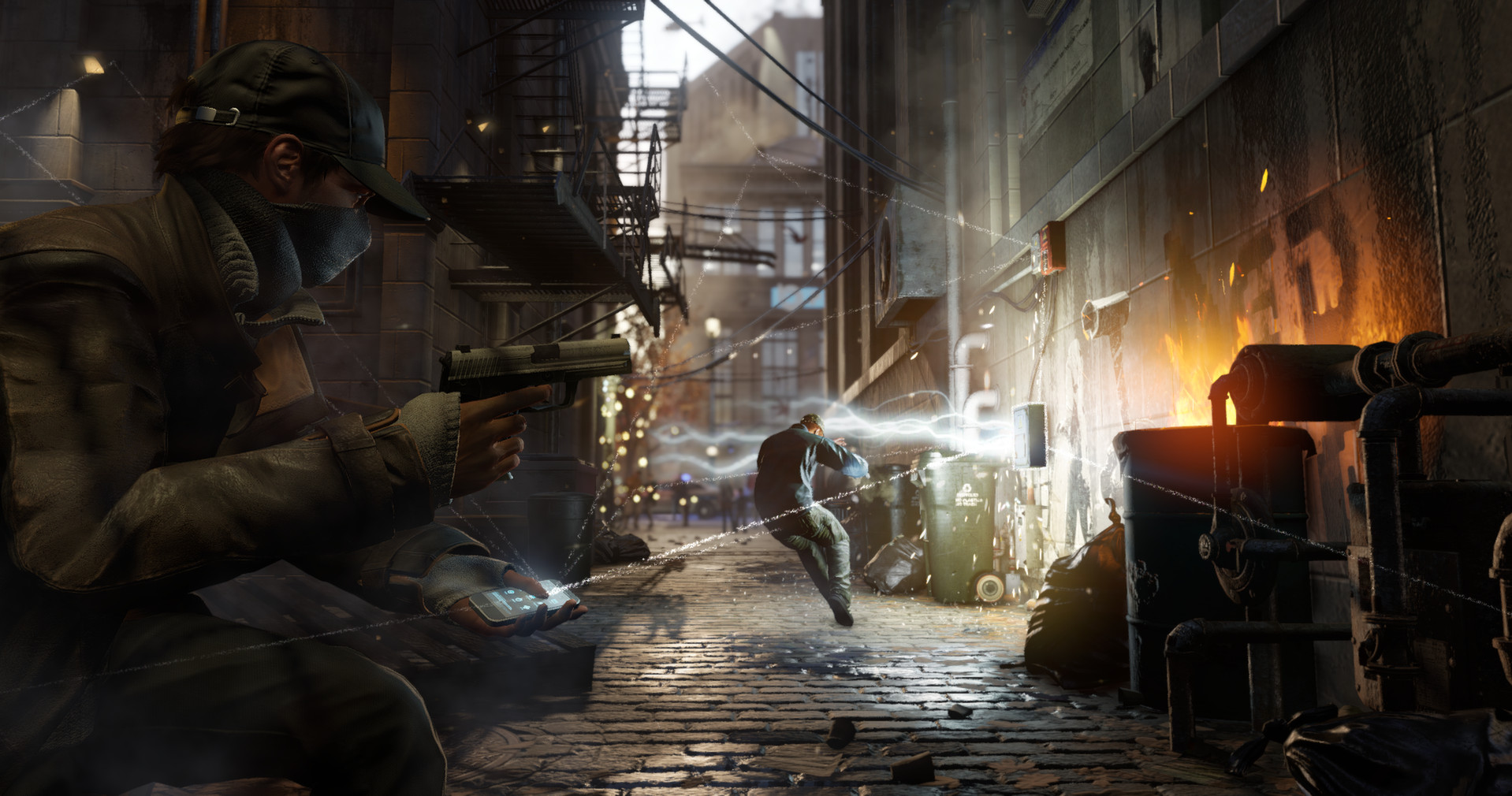 Scene from Watch_Dogs 2.
This ambient structure borrows from Hitman's sandbox logic — the idea that a level should teach you its rhythms through observation rather than instruction. IO Interactive formalized this with Elusive Targets; Watch Dogs 2 does something rougher but real. The payoff isn't always worth the legwork, honestly. Some of these ambient pickups yield modest follower counts and little else. But the act of reading a space, tracking a pattern, and executing a plan without a waypoint marker pointing you to a yellow circle? That's rare in Ubisoft open worlds, and it's worth recognizing.
Driver SF, the Bounty Hunter Calls, and the Underground Racing Layer
Underground events in Watch Dogs 2 are split across two parallel systems that barely speak to each other. The Bounty Hunter calls — unlocked after a certain threshold of heat accumulated from law enforcement — drop Marcus into marked pursuit sequences where rival hackers or Blume contractors are actively tracking him. These read as straight action content, but the smarter approach is environmental: cutting power to bridges, trapping vehicles in parking structures via app, using the Jumper RC drone to spike tires remotely. The game doesn't grade you on style, but the design space accommodates it.
The Driver SF app — a separate racing layer triggered through specific nodes around the city — is probably Watch Dogs 2's most underplayed system. It reads as a throwaway driving minigame at first glance. Stick with it. The event chains eventually surface a handful of races that cut through areas of the map most players never visit at speed: the industrial waterfront south of Dogpatch, the switchbacks behind Twin Peaks. The pacing in those sequences is genuinely good, and the vehicle handling — looser and more arcade-oriented than the first game — plays to them. There's no major narrative payoff waiting at the end of the chain, which is a real shortcoming, but the level design itself earns the time.
ScoutX and the Hidden Photography Missions Across the Bay
ScoutX is the photography app embedded in Marcus's phone, and it's one of those mechanics that sounds like padding — 'go take pictures of landmarks, get followers' — but disguises some of the more interesting traversal puzzles in the game. Several ScoutX targets are positioned in locations that require you to solve an environmental problem before you can frame the shot correctly: a rooftop only accessible by chaining a scissor lift hack to a freight elevator, a bayside angle that requires swimming into a restricted shipping zone, a fog-obscured tower in the Marin Headlands that the game marks as accessible but doesn't explain how.
The Marin target specifically is worth mentioning because it asks you to synthesize several of Watch Dogs 2's traversal tools at once. You're using the Jumper for ground-level scouting, the Quadcopter for aerial reconnaissance, and your own movement for the final approach — which is, structurally, what the reconnaissance phase of any good heist sequence requires. The comparison isn't forced: the same three-act arc of scout-plan-execute that defines Ocean's Eleven's structure, or the climactic arc in Payday 3's vault sequences, is embedded in a photography app mission that most players will dismiss as filler.
Criminal Convoy Intercepts and the Risk-vs-Reward Design
The criminal convoy system — spawned by accessing ctOS towers and locating high-value data transports — is Watch Dogs 2's closest equivalent to the structured heist set-piece. A convoy appears on the map as a moving icon, and Marcus has a window to intercept it before it reaches its destination. The content inside is usually money for the DedSec fund or specific Research gear, but the delivery mechanism varies: sometimes you're stealing the vehicle itself, sometimes extracting a passenger, sometimes triggering a remote hack while the convoy is still mobile.
What makes these work is the risk-vs-reward tension that scales with how aggressively you pursue them. Hit a convoy quickly and sloppily and you'll have Blume security and SFPD stacking up within 90 seconds. Hang back, use the Quadcopter to identify escort vehicle positions, cut the support cars off individually — and the intercept can be almost clean. That design logic owes something to the emergent difficulty scaling in Red Dead Redemption 2's stranger encounters, where the game doesn't punish ambition but it does punish impatience. A few of these convoys are worth farming specifically: the Blume data transport that circles Chinatown has consistently high Research yields and a manageable escort load.
The Haum-WtF and Other Hidden Mission Chains Worth Starting
Haum-WtF is an extended side mission chain — not a story op, technically, though the writing team gave it more cutscene attention than most of the optional content — that tasks DedSec with exposing a smart-home company's data practices. It spans multiple San Francisco neighborhoods and involves a home intrusion sequence that is probably the most explicitly heist-structured moment in the game outside the main story. You're casing a residential building through leaked floor plans accessed via Quadcopter, identifying a time window, choosing an entry point. The design is clean and the writing has actual jokes in it, which matters more in Watch Dogs 2 than people admit.
There's also a quieter mission chain involving a ghost kitchen operation in Oakland — accessible only after completing the first act — that connects to the DedSec companion NPCs in small ways the game doesn't explain upfront. Wrench and Sitara have ambient dialogue specific to each drop location if you bring them along in co-op, which is the kind of bespoke texture Rockstar does obsessively in GTA V and that Ubisoft only occasionally manages to pull off. It's not deep lore. But it makes the side content feel inhabited rather than procedurally deposited.
Co-op Stranger Missions and What Gets Lost in Solo Play
Watch Dogs 2's seamless co-op integration means some of the best side content is technically accessible solo but designed with two players in mind. The stranger missions — triggered by approaching specific NPCs who appear only in online sessions — include a small number of two-stage jobs that require simultaneous hacks on different parts of a building. Solo, these become timing puzzles you're brute-forcing. With a second player, they're coordination exercises where the communication overhead is actually part of the challenge. The distinction matters because it changes what the mission is testing.
Whether the always-online requirement for these was worth the occasional friction — dropped connections mid-job, NPC targets desyncing — is a legitimate design question Ubisoft never fully resolved. I'm not convinced the stranger mission pool was large enough to justify the infrastructure cost for solo-preferred players. But the best of those two-person jobs have a tempo that's hard to replicate elsewhere in the game: the slow approach, the synchronized trigger, the window where everything either holds or falls apart. That tension is why the heist set-piece became a genre staple, from the New Vegas Strip's faction-driven venue design to Yakuza's arcade and cabaret club subgames demonstrating what side content can feel like when it's built with genuine craft. Watch Dogs 2 earns its place in that company — unevenly, sometimes frustratingly, but more often than its reputation suggests.
If you've been treating the side content as optional noise between story missions, start with the Haum-WtF chain, then work backward through the convoy intercepts. The game reveals itself differently when you treat the map as a space to read rather than a checklist to clear.
Reader Q&A
What's the standout set-piece in Watch_Dogs 2 like?
Mission-driven and well-paced. Multiple approach angles — stealth or loud — and consequences depend on enemy AI and scripted triggers. Most players settle into a rhythm by the second attempt.
How long is the major mission arc in Watch_Dogs 2?
Around 4-8 hours depending on how thoroughly you scout. The full campaign is significantly longer; this arc is one set-piece among many.
Do I need prior series knowledge before playing Watch_Dogs 2?
Most entries in this lineage stand alone. Helpful context if you've played the predecessors, but not required. Each title resets the player's frame of reference.
What makes a heist-style sequence land?
Sightline clarity, NPC density, audio cues, set-piece pacing. When all four align, the sequence is memorable. When even one's off — say, flat NPC behaviour — it falls flat.
Is Watch_Dogs 2 accessible to newcomers to the genre?
Generally yes. Systems are introduced gradually and difficulty is forgiving on default. Veterans will get more from the deeper systems, but the surface layer welcomes new players.
Which films influenced this design lineage?
Soderbergh's Ocean's Eleven, Mann's Heat, and Scorsese-era crime films are the obvious roots. Designers from this subgenre have cited those films in interviews going back twenty years.
Reader comments