The Lands Between will kill you — read the ground first
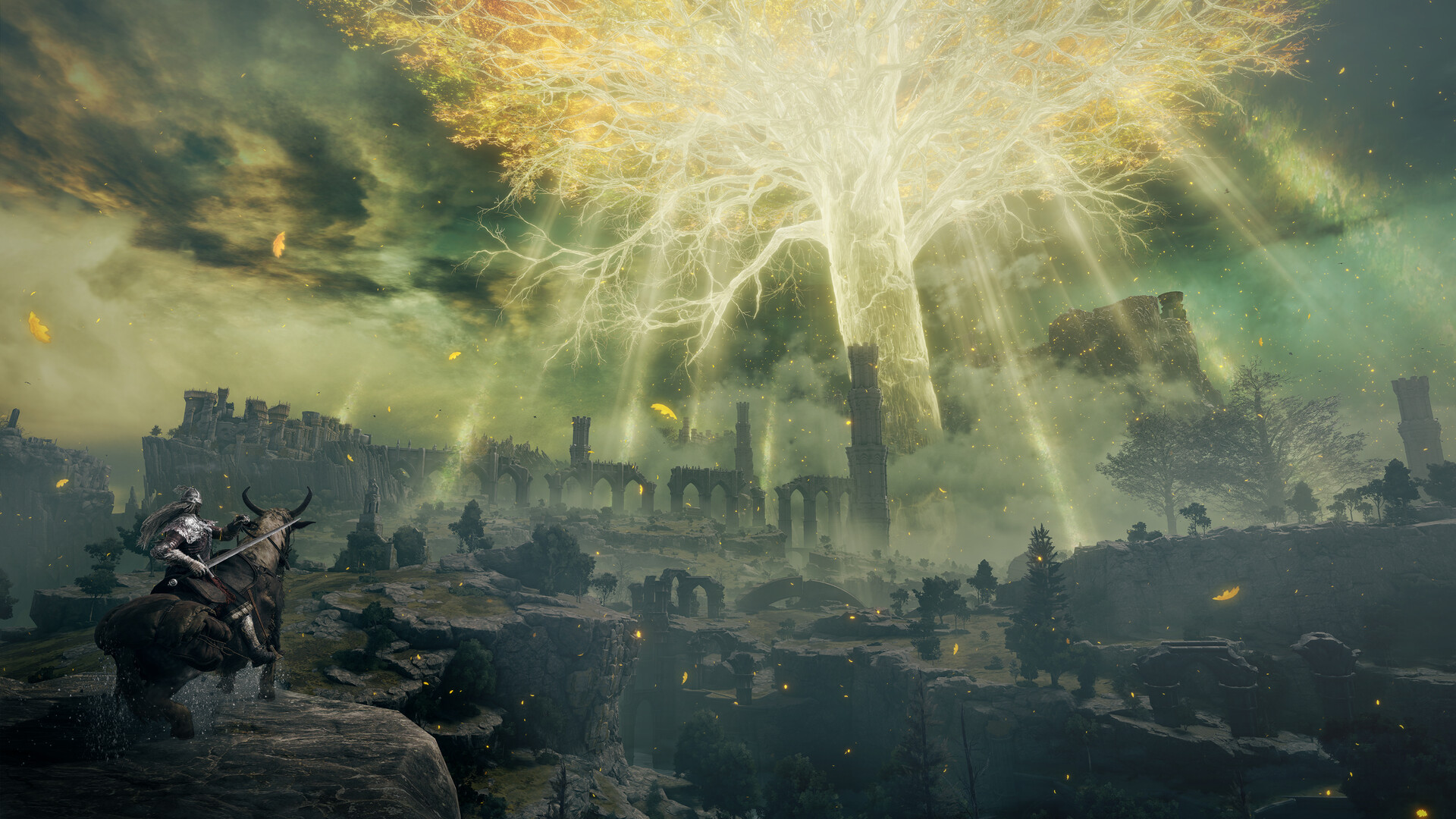
Elden Ring doesn't explain itself, and that is a feature, not an oversight. FromSoftware has operated this way since Demon's Souls in 2009 — the assumption being that you, the player, are capable of observing your environment, failing in it, and adjusting. Most new players treat that bargain as adversarial. It isn't. The game is genuinely trying to teach you, just not through pop-up windows and waypoint arrows.
What follows is a practical breakdown for players who've either just arrived in Limgrave or have been bouncing off the same boss for three hours without a clear sense of why. No padding. The Lands Between rewards reading your surroundings — terrain, enemy placement, item positioning — more than it rewards raw aggression or grinding. Once you understand what the game is actually showing you, most of the early friction dissolves.
Your first hour should be slow on purpose
The tutorial cave beneath the Chapel of Anticipation — the section after the first boss kills you — is short enough that players rush it. Don't. That cave teaches the two most important physical mechanics in the game: the plunging attack and the critical hit from behind. Both are demonstrated via enemy placement, not text. The small soldier sleeping against the wall at the bottom of a ledge? He's there specifically so you'll drop on him. The rat in the alcove turned away from you? Back-stab tutorial. These aren't accidents.
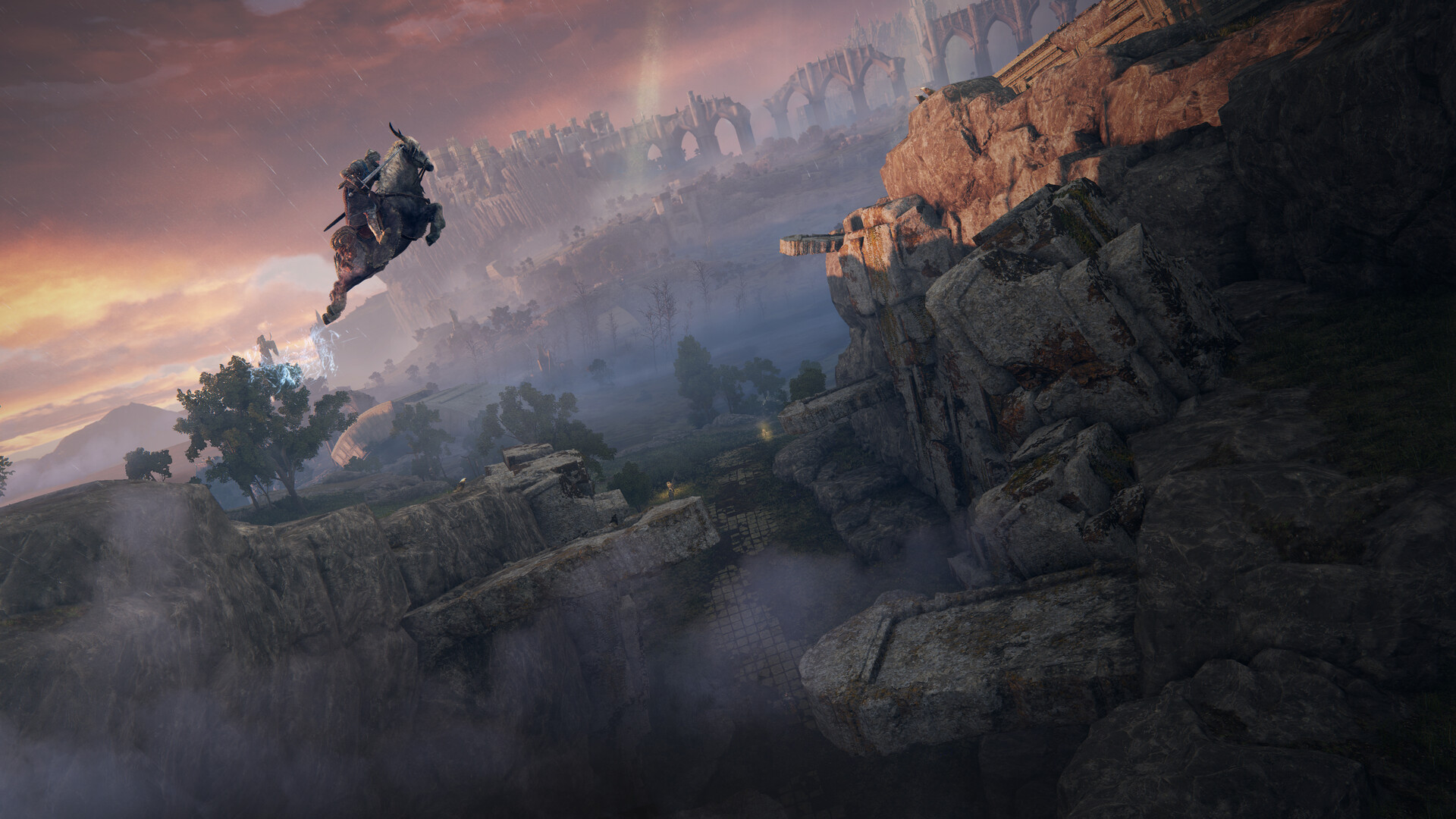 Scene from Elden Ring.
When you emerge into Limgrave proper, resist the instinct to immediately run toward the glowing Site of Grace and start level-shopping. Stand still for a minute. Look north toward Stormveil. Look at the Tree Sentinel patrolling the road. FromSoftware almost always places an obviously dangerous enemy directly in your path early — this dates back to the Giant in Anor Londo in Dark Souls — as a visual signal: you can go around. The Tree Sentinel is not a gate, he's a suggestion. The suggestion is: go east, into the Gatefront area, at your current level. Read the signposting.
Stamina is the real difficulty setting
More players die to mismanaged Endurance than to any specific enemy. The Endurance stat governs your stamina bar, which depletes when you attack, block, roll, and sprint. Run it to empty mid-fight and your character staggers. Get hit during that stagger and the next few seconds can spiral fast. The invisible skill the game is training you toward is keeping a partial stamina reserve at all times — never draining the bar fully, never committing your last point of stamina to an attack when an enemy still has an active move pending.
Heavy armor makes this harder because it increases your equipment load, pushing you into slower roll animations. The 'fat roll' — the sluggish, short-distance roll that kicks in above 70% equipment load — is not a viable defensive option against most mid-game enemies. Keep your load below 40% of your equipment weight maximum for the medium roll, which carries noticeably more invincibility frames. There's a calculator in the equip screen. Use it rather than eyeballing it.
If you're building a strength character and want heavy armor, invest early in Endurance. Hitting 25 Endurance before you push into Stormveil Castle is a reasonable benchmark. Going in at base Endurance with a full knight set is how you learn this lesson the hard way in Margit's second phase.
The map is telling you the intended order
Elden Ring looks open. It is — mostly. But the enemy density, level scaling, and available upgrade materials follow a fairly clear radial logic outward from Limgrave. Caelid, the rust-red region east of the starting area, is visually accessible within the first hour but is populated by enemies tuned for players who've cleared Stormveil and Liurnia. The dog-creatures in Caelid can two-shot characters with 30+ vigor. They're not doing that because the game wants you there yet.
The intended early loop: Limgrave → Stormveil Castle (Godrick) → Liurnia of the Lakes → Raya Lucaria Academy (Rennala). From Liurnia you can also reach Altus Plateau early via the Grand Lift of Dectus or through the Ruin-Strewn Precipice dungeon. Most of the game's 13 Legacy Dungeons have a natural order that the surrounding field enemies telegraph by their difficulty. If the enemies outside a dungeon are killing you in two hits, you're supposed to come back later.
One genuine shortcut worth knowing: the underground Siofra River Well in east Limgrave opens early and contains materials that can carry your weapon upgrade significantly ahead of the surface-area curve. The enemies there are harder, but the area itself has minimal hostile density if you stay on the paths. It's one of those places the game hides in plain sight — a well by the road, easily missed — that rewards exploration over linearity.
How to handle a boss that's stopped you cold
Two things cause most boss walls: being underleveled, and attacking on the wrong frame. The second one is more common. Most FromSoftware bosses have a 'punish window' — a moment after their attack animation where you deal your counter-hit damage. Newer players swing too early, clash with the boss's hitbox, and then get caught by the follow-up combo. Learning the punish window usually takes between five and ten attempts at a boss purely for observation. Not killing, not panicking. Watching what the recovery animation looks like.
If you've done 15-plus attempts and aren't seeing clear progress, consider a Spirit Ash summon. Mimic Tear (pre-nerf) was arguably broken, but the standard Spirit Jellyfish or Lone Wolf ashes from early game create enough threat-split to change the encounter meaningfully. Calling in a summon is not the same game design as Sekiro's posture system, which builds around strict 1v1 mechanics. Elden Ring was designed with summons factored in — there's a golden summoning circle outside nearly every major boss fog gate.
Flask allocation and upgrade priority
The Flask of Crimson Tears heals HP. The Flask of Cerulean Tears restores FP (the mana equivalent). You start with four total charges split between them. Golden Seeds increase your total charges; Sacred Tears increase the amount each charge restores. Both are found across the world — Golden Seeds under small glowing Erdtree saplings, Sacred Tears inside churches.
For non-magic builds, running a 4-0 or 3-1 split in favor of Crimson is reasonable through the first two Legacy Dungeons. Magic and Faith builds need FP for damage and buffs, so they shift the split accordingly. The reallocation is done at any Site of Grace. The system is more flexible than most players assume — there's no cost to rebalancing before a specific fight.
Smithing Stones for weapon upgrades are the other early priority. Regular weapons top out at +25, Somber-upgraded special weapons at +10. Smithing Stone [1] and [2] are plentiful in the Limgrave Tunnels and Morne Tunnel. Get your main weapon to +4 or +5 before Margit. The difference in damage output is significant enough that a +3 weapon versus a +5 weapon can mean an extra phase of punishment on a boss who already has a large HP pool.
What grace sites aren't telling you
Every Site of Grace shows a faint golden arrow pointing in a direction when you rest. New players often ignore this. It's pointing toward what FromSoftware considers the next narratively significant location from your current position. It won't stop you exploring elsewhere, and you should — but if you're ever genuinely lost and don't want a full walkthrough, following the light is a reasonable orienting tool. It shifts as you progress story-relevant events.
Resting at a Site of Grace also respawns most enemies. This is not a punishment, it's the economy. Runes — the experience and currency combined — come from enemies. The intended income loop involves clearing an area, dying or resting, and doing it again with better gear knowledge than the previous pass. Players who try to avoid resting to 'preserve' cleared areas are working against the game's resource structure rather than with it.
Elden Ring sits in an interesting place in FromSoftware's catalog — more expansive than Dark Souls III, more accessible than Sekiro, and more densely populated than Bloodborne's DLC. None of that makes it easy. But 'difficult' and 'illegible' aren't the same thing, and most of what feels arbitrary on a first run turns out to be deliberate instruction. The ground is talking. The enemy positions are talking. The item placements are talking. It's just that the game expects you to listen before it expects you to fight.
Reader Q&A
Is this guide spoiler-free?
We avoid story spoilers. Mechanics and systems are explained directly, but plot beats are not covered.
How current is this guide?
Updated for the most recent patch as of June 2026. Major balance changes are noted inline.
Do I need DLC for these strategies to work?
No. Everything covered here applies to the base game. Where DLC content is referenced, we mark it clearly.
Will following this guide work on hardest difficulty?
Mostly — yes. A few strategies become tight on hardest difficulty; we flag those where relevant.
Reader comments