Los Santos rewards the curious — here's how to stop missing it
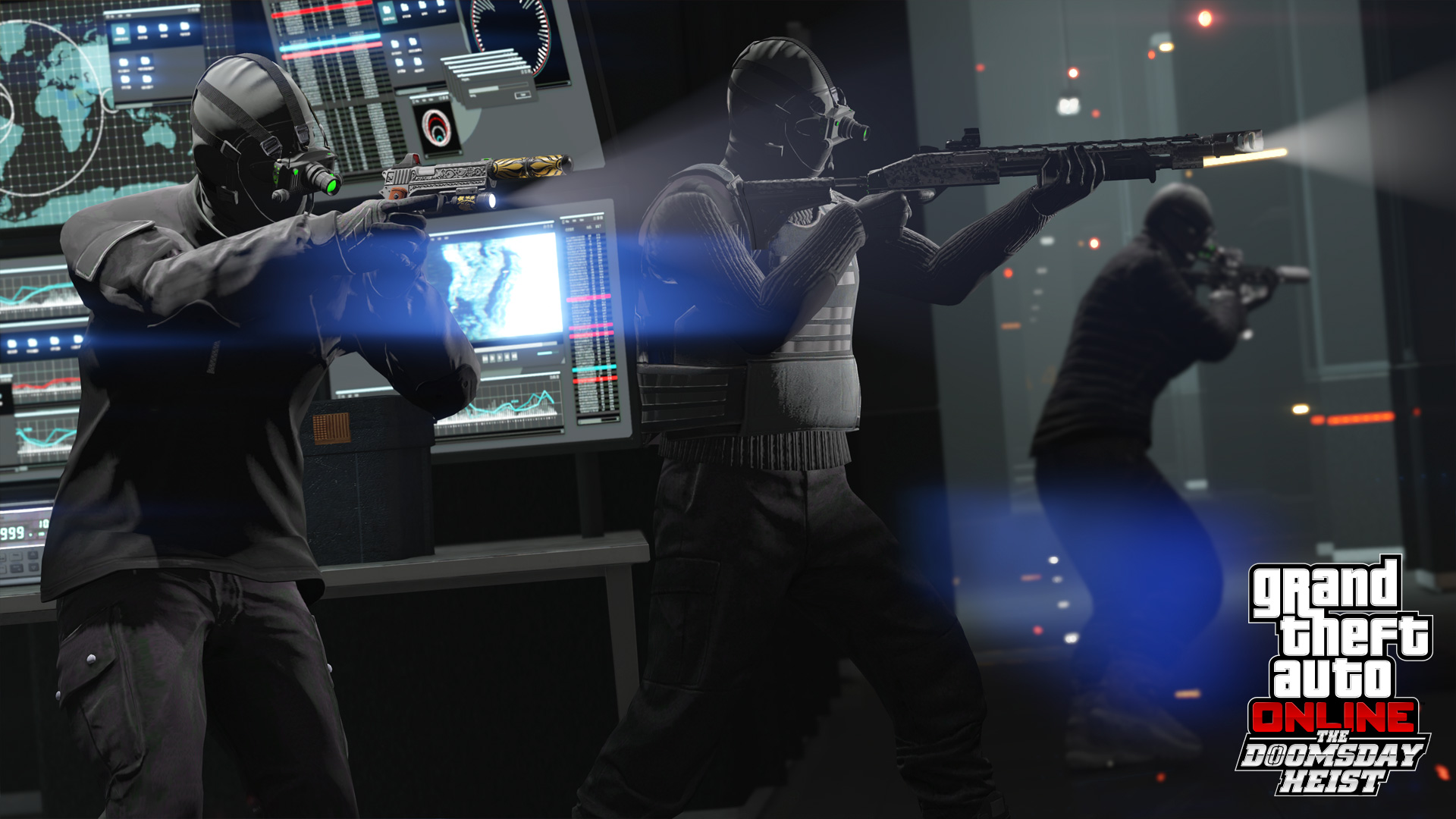
Grand Theft Auto V came out in 2013. It is now old enough to have younger siblings who are also old. And yet Rockstar's Los Santos keeps pulling in new players — partly through GTA Online's relentless update cadence, partly because the single-player campaign still holds up better than its age suggests. The city itself is the feature. But the city doesn't explain itself. If you're arriving late or stuck in the mid-game doldrums, there's a good chance you're coasting through maybe forty percent of what the game actually offers.
This guide is for the player who finished the story, dabbled in Online, and feels like something is missing — or the newcomer who wants to skip the usual trial-and-error spiral. Not everything here is secret knowledge. Some of it is just the stuff the game buries behind a loading screen tip that nobody reads.
The map isn't decoration — read it actively
Los Santos is roughly modeled on Los Angeles, and like LA, it rewards knowing which neighborhood you're actually in. The game divides its territory into distinct zones — Vespucci Beach, Rockford Hills, Paleto Bay, the Alamo Sea — and each has its own activity density. Random events, ambient side content, and dynamic NPC behavior cluster by location in ways the radar doesn't telegraph. A blinking dot means something is happening right now. Most players dismiss these. Don't.
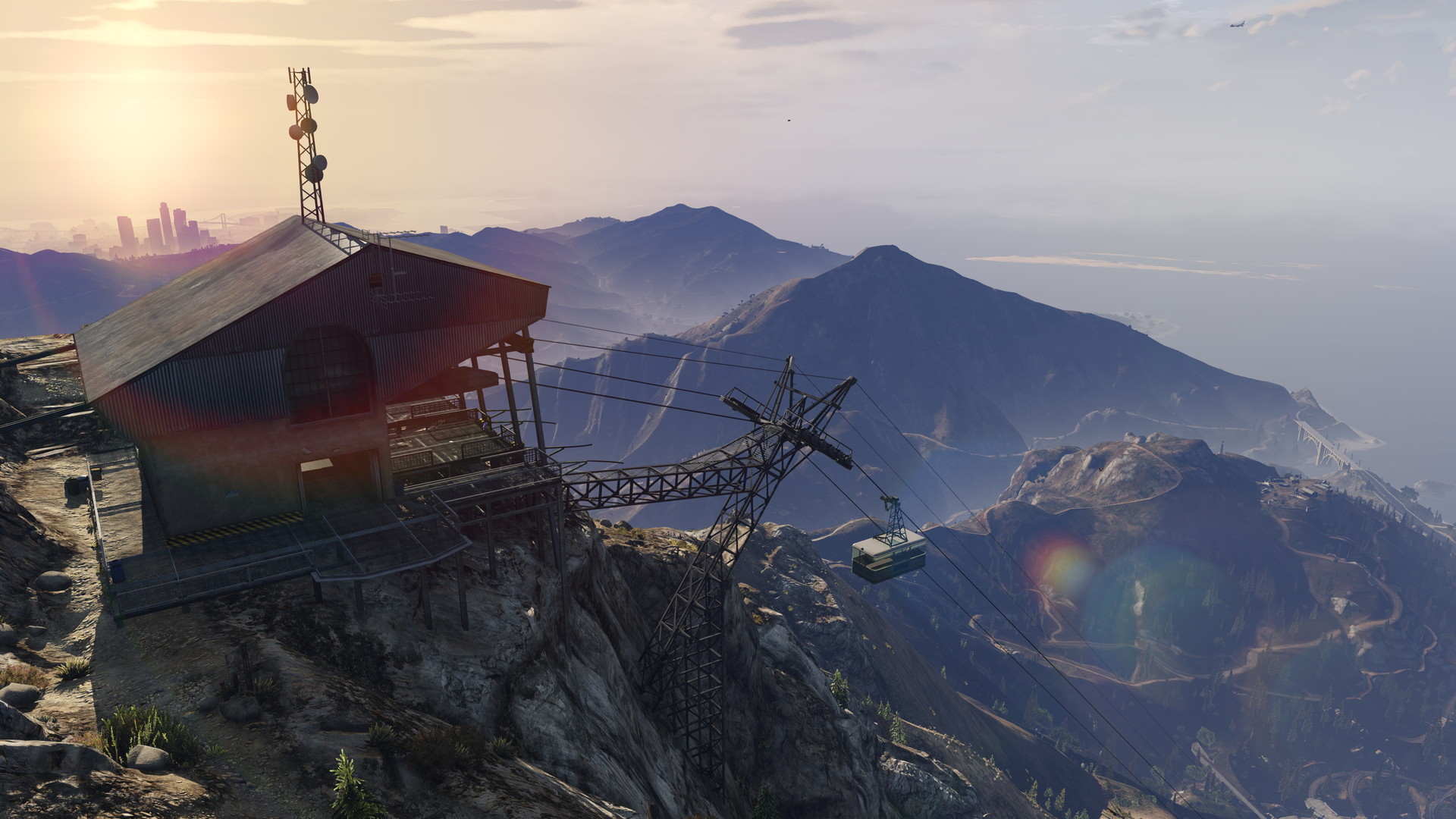 Environmental detail in Grand Theft Auto V.
Random events are 57 scripted encounters scattered across the map, from armored car heists to strangers needing a ride to the airport. They don't repeat endlessly — most trigger once per character. Missing them means missing them. The game won't chase you down and demand you engage. Keep an eye on the blue dot indicators when you're driving between objectives and actually pull over when you see one. A handful of them feed directly into side missions and unlock small but useful rewards: discounts at Ammu-Nation, relationship boosts with certain characters, and occasionally vehicles you can't buy outright.
The Blaine County interior — everything north of the city proper — is where a lot of mid-game players stop exploring. That's a mistake. The Alamo Sea area in particular has a density of ambient content that doesn't announce itself: the Epsilon Program missions start from an email after you visit their website, the Altruist Cult questline begins with a simple hitchhiker encounter near Sandy Shores. None of this is in the mission list. It just exists, waiting.
The three-character system has a logic — use it
Michael, Trevor, and Franklin each have skill trees that level independently based on how you play each character. Rockstar designed the switching system so that while you're away from a character, they're theoretically getting on with their lives — Michael might be at his mansion watching TV, Trevor could be at his trailer in Sandy Shores. This idle behavior is cosmetic, but the passive income and skill accumulation from certain activities isn't. If you're only playing Franklin and ignoring the others, you're leaving two character arcs half-developed and missing missions that only unlock through the other two.
Each character's special ability is different and genuinely affects how you approach content. Michael's slow-motion shooting is legitimately useful in firefights with multiple enemies at close range. Trevor's damage resistance and attack multiplier turns him into the right tool for reckless takedowns where stealth has already broken down. Franklin's driving focus is the reason the game defaults to him for vehicle chases. Treating them as identical is leaving design utility on the table.
Heists are not the endgame — they're the curriculum
The game's five major heists — Jewel Store Job, Merryweather Heist, Paleto Score, Bureau Raid, and the Big One — are story missions with selectable approaches. Most guides tell you which crew members to hire. Fewer explain why the preparation missions before each heist are worth doing attentively rather than blitzing through. The setup missions teach you the game's systems: how NPC aggression scales with wanted level, how escape routes in different city districts behave, how cover-shooting works against armored enemies versus unarmored ones.
The approach split in The Big One — Subtle, Obvious, or Big Con — isn't just cosmetic variation. Each route uses a different combination of mechanics and involves different crew compositions. The Big Con approach in particular has a disguise sequence that's closer to something you'd see in Hitman: World of Assassination than what you'd expect from a GTA mission. Playing all three across different playthroughs isn't necessary, but understanding that the choice has mechanical consequences shapes how you plan the earlier setup work.
Crew selection carries real weight too. Hiring Packie McReary — who you can unlock through a random event near the Maze Bank Arena — gives you a mid-tier gunman for a lower cut than you'd pay for Norm Richards at the same skill level. The game gives you enough information to make informed choices if you pay attention to the stat screens. Most players don't. They either always hire the cheapest option or always hire the best, missing the interesting middle ground.
GTA Online has a hierarchy and it matters which order you learn it
GTA Online in 2024 is a different animal than it was at launch — it's been patched, expanded, and re-balanced across more than a decade. The current content hierarchy, roughly speaking, goes: contact missions to build early cash and RP, then the original heists for structured co-op experience, then business properties like the Bunker and Nightclub, then the newer Cayo Perico and Doomsday heists for higher-volume returns. The mistake most new Online players make is trying to jump to the high-end content before they understand the systems the earlier content teaches.
The Nightclub business, added in the After Hours update, is one of the more elegant passive income designs in the game: it aggregates production from your other businesses automatically once you assign technicians, meaning it rewards players who've already invested in multiple revenue streams rather than replacing them. It's not a shortcut. It's a multiplier. Starting with it before you own a Bunker or MC business means the technicians have nothing to aggregate and you've spent a significant sum on an empty building.
The stuff the game teaches badly
Wanted level management is under-explained. The game shows you the six-star wanted system but doesn't clearly communicate how line-of-sight works for de-escalation. You don't need to outrun the police indefinitely — you need to break their visual contact and stay out of the search radius for roughly a minute per star level above two. Driving into a tunnel, switching vehicles in a parking structure, or using Trevor's camouflage system near Sandy Shores are all faster solutions than a high-speed freeway chase that risks mission-failure collateral.
The weapon wheel, ported to console with some awkwardness from PC's more fluid keyboard cycling, has a modifier most players miss: you can assign weapons to specific slots in the inventory menu, which means you can build a loadout that cycles logically during combat rather than hunting through nine categories while someone is actively trying to kill you. Small thing. Makes a genuine difference in the heist missions where enemy waves come quickly.
The stock market in single-player — both BAWSAQ and LCN — is something players either obsess over or ignore entirely. The LCN market responds to in-game events, including assassinations you carry out for Lester. This is explicitly set up by the game but easy to miss if you rush through the Lester missions: do the first one before buying stock in the competitor, and you lose a significant money-multiplier opportunity. The sequence matters. Franklin's first Lester mission is tutorial-level obvious about this; the remaining four are not.
Properties and safehouses — buy deliberately, not reflexively
The game lets you buy properties from early on, and the temptation is to acquire them for their passive weekly income. Some are worth it. The Downtown Cab Co. and the Los Santos Customs in La Mesa generate reliable returns and have tied missions that improve their yield. Others — particularly some of the smaller businesses — pay out so slowly relative to their purchase price that you'll never recoup the investment in a normal playthrough. Check the weekly income figure against the purchase cost and do the arithmetic before buying.
Safehouses have a less obvious utility: they're fast travel anchors. The game doesn't have a traditional fast travel system, but saving at a purchased property respawns you there. Owning a safehouse near the airport, one near the docks, and one in Blaine County gives you geographic flexibility that matters when you're cycling between story missions spread across the map.
Los Santos is the kind of open world that punishes passivity. Not with difficulty spikes or punitive systems, but with the quiet cost of never knowing what you missed. The curious player — the one who pulls over for the blue dot, who checks the stock ticker after a Lester call, who actually reads the property income descriptions — ends up playing a richer, more textured game than the one Rockstar bothered to explain in the tutorial. That gap between the explained game and the actual game is where most of the good stuff lives.
Reader Q&A
Is this guide spoiler-free?
We avoid story spoilers. Mechanics and systems are explained directly, but plot beats are not covered.
How current is this guide?
Updated for the most recent patch as of June 2026. Major balance changes are noted inline.
Do I need DLC for these strategies to work?
No. Everything covered here applies to the base game. Where DLC content is referenced, we mark it clearly.
Will following this guide work on hardest difficulty?
Mostly — yes. A few strategies become tight on hardest difficulty; we flag those where relevant.
Reader comments